
There are many types of Bougainvillea, including dwarf shrubs, compact container plants, vigorous climbing vines, variegated varieties, bicolor selections, and lower-thorn options. Most are grown for their colorful papery bracts, not true petals. The best variety depends on the color you want, how much space you have, whether you are growing in a pot or in the ground, and how much pruning you are willing to do.
Bougainvillea varieties can look similar at first glance, but they differ in bract color, mature size, growth habit, thorniness, bloom intensity, and landscape use. Some are better for patios and hanging baskets, while others are better for covering walls, fences, trellises, and arbors.
For deeper help choosing a variety, use HerbVity’s dedicated guides to bougainvillea colors, rare bougainvillea varieties, bougainvillea variety identification, dwarf bougainvillea varieties, and thornless bougainvillea varieties.
Quick Bougainvillea Variety Comparison
Use this table as a starting point. Bougainvillea size and thorniness can vary by pruning, climate, age, and nursery stock, so always check the plant label before buying.
| Variety name | Main color | Growth habit | Approximate size | Best use | Container-friendly? | Thorn level | Notes |
|---|---|---|---|---|---|---|---|
| Easter Parade | Lilac to lavender | Dwarf shrub | 3–5 ft | Pots, patio containers, small hedges | Excellent | Medium | Use it in a pot, a small hedge, or a compact sunny border. Keep it in strong light and prune lightly to hold a tidy shape. |
| Hugh Evans | Pale coral to pink | Compact shrub | 3–5 ft | Mixed borders, pots, contrast planting | Good | Variable | This variety can be described as thorny or lower-thorn depending on nursery stock, so inspect the plant before buying if thorniness matters. |
| James Walker | Hot pink, orange-pink, or reddish purple | Compact vine or shrub | 4–12 ft when pruned; larger if trained | Pots, baskets, arbors, bonsai-style shaping | Good | Medium | Because this name is sometimes used for plants trained in different ways, check the plant label for expected mature size. |
| Helen Johnson | Pink | True dwarf shrub | 2–4 ft | Patios, rock gardens, containers, small beds | Excellent | Low to medium | Use it where a vigorous wall-covering vine would be too much. |
| Sunvillea Rose | Rose-pink to magenta | Dwarf shrub | 2–3 ft | Patio pots, porch displays, small borders | Excellent | Medium | Give it full sun and avoid soggy soil, especially in containers. |
| Pink Pixie | Pink | Dense dwarf shrub | 2–4 ft | Containers, edging, small borders | Excellent | Medium | It works best where the plant can be viewed up close, such as a patio container or sunny entryway. |
| Rosenka | Gold aging to pink | Dwarf shrub | 3–4 ft | Pots, poolside color, small borders | Excellent | Medium | Use it as a feature plant in a pot or in a small border where the color change is easy to see. |
| Yani’s Delight | Pink, violet, and cream tones | Small shrub | 2–3 ft | Pots, sunny patios, soft-color gardens | Excellent | Medium | It is better for small-space color than for covering a large fence or wall. |
| Crimson Red | Crimson red | Compact climber | 4–6 ft | Arbors, baskets, walls, sunny fences | Good | Medium | Train young growth early if you want a neat climbing form. |
| Don Fernando | Tomato red to crimson red | Vigorous shrub or vine | 6–12 ft or more | Warm borders, large pots, summer color | Good in large pots | Medium | Give it full sun, good drainage, and enough room to develop. |
| Orange Ice | Orange with variegated foliage | Trailing vine | 2–4 ft trailing | Hanging baskets, trellises, containers | Excellent | Medium | It is especially effective in hanging baskets or containers where the trailing habit can show. |
| Temple Fire | Fuchsia-pink with warm orange tones | Dwarf to compact shrub | 3–5 ft | Pots, hedges, baskets, patio displays | Excellent | Medium | Use it in full sun for the strongest bract color. |
| Sunvillea Cream | Cream to pale white | Dwarf shrub | 2–3 ft | Containers, patios, mixed displays | Excellent | Medium | Use it where a light-colored bract will contrast with darker foliage or hardscaping. |
| Royal Purple | Deep purple | Shrubby vine | 5–15 ft | Landscape shrubs, fences, sunny borders | Good in large pots | Medium | Give it full sun and regular shaping if you want it to stay compact. |
| Purple Queen | Deep purple to violet | Semi-dwarf vine or upright shrub-like form | 10–15 ft | Walls, fences, trellises, arbors | Good in large pots | Medium | Often listed as Moneth. Confirm mature size and thorn level with the nursery label. |
| Vera Deep Purple | Fuchsia to deep purple | Semi-dwarf shrub | About 4 ft | Pots, porches, small patios | Excellent | Medium | It is a good option for a container where a large wall vine would be too aggressive. |
| Imperial Delight | White aging to soft pink | Semi-dwarf to medium vine | 10–20 ft | Arbors, trellises, large containers | Good in large pots | Medium | It is a good choice when you want a gentler look than red, purple, or magenta varieties. |
| Paper Flower | Magenta to red | Woody climber | 15–30 ft | Bonsai, walls, trellises | Good in large containers | High | It can become large in warm climates, so plan for pruning and support. |
| Great Bougainvillea | Purple to magenta | Large woody vine | 15–40 ft | Large walls, fences, screens | Only very large tubs | High | It is not the best choice for a tiny balcony or narrow walkway. |
| James Walker | Reddish purple with pale centers | Trained vine or large shrub | Can be trained larger | Garden structures, entryways, arbors | Good in large pots | Medium | Because James Walker appeared twice in the original article, keep this section only if you want to preserve the original 40-image sequence. Otherwise, merge it with item 3. |
| Texas Dawn | Light pink to deeper pink | Vigorous vine | 10–20 ft | Walls, fences, garden backdrops | Good in large pots | Medium | Train it early if you want even coverage across a fence, wall, or trellis. |
| Bougainvillea × buttiana | Magenta, rose, or red-toned bracts | Hybrid vine | 15–30 ft | Warm-climate landscapes, walls, large trellises | Good in large pots | Medium to high | This is a hybrid group rather than a single decorative cultivar, so expect variation. |
| Barbara Karst | Magenta-red to bright red | Vigorous vine | 20–30 ft or more | Arbors, walls, banks, fences | Good in large pots | High | Use the spelling Barbara Karst. Give it strong support and enough room to grow. |
| Lady Baring / Hawaiian Gold | Bright yellow to gold | Large vine | 20–30 ft | Sunny walls, fences, tropical-style landscapes | Good in large pots | High | Yellow and gold Bougainvillea varieties look especially good against white walls and terracotta pots. |
| Orange King | Orange to orange-red | Large vine | 10–30 ft | Fences, warm walls, Mediterranean-style gardens | Good in large pots | High | Use it as a focal plant in hot, sunny spaces. |
| Gold Rush | Yellow to gold | Shrubby vine | 10–20 ft | Warm borders, walls, large containers | Good in large pots | Medium | Avoid too much shade, which can reduce bract display. |
| White Stripe | White to cream with variegated foliage | Vine | 8–20 ft | Foliage contrast, walls, groundcover, mixed plantings | Good in large pots | Medium | Use it where variegated leaves can brighten a planting scheme. |
| New River | Intense purple | Large vine | 20–40 ft | Large walls, screens, bonsai training if pruned hard | Large pots only | Medium to high | Do not plant it where a small dwarf variety would be more practical. |
| Purple Queen / Moneth | Deep purple | Upright shrub-like vine | 15–20 ft when trained | Fences, arbors, warm-climate annual color | Large pots | Variable | If you want a cleaner article, merge this entry with item 15. If you want to keep one image per original item, keep both and make the distinction clear. |
| Elizabeth Angus | Violet to magenta | Shrubby vine | 12–15 ft | Arbors, groundcover, sunny fences | Good in large pots | Medium | It can be pruned into a more controlled form if needed. |
| Rosa Preciosa | Pink | Medium vine or shrub | 8–16 ft | Large pots, sunny patios, warm outdoor spaces | Good in large pots | Medium | It is best used where it can get full sun and good drainage. |
| Miami Pink | Hot pink | Large vine | 20–30 ft | Entryways, large arbors, warm walls | Good in large pots | High | Use it where the plant has room to spread and can be pruned safely. |
| Juanita Hatten | Deep red | Large vine | 20–40 ft | Privacy screens, borders, walls, large structures | Very large tubs only | High | Keep it away from narrow paths unless you are prepared to prune it regularly. |
| Rainbow Gold | Apricot, peach, orange, and gold tones | Medium to large vine | 10–20 ft | Walls, fences, feature containers | Good in large pots | Medium | Use it as a feature plant where the color variation can be appreciated. |
| Sundown Orange | Orange shifting to yellow and salmon-pink | Large vine | 10–30 ft | Trellises, fences, walls, large containers | Good in large pots | Medium | Its shifting color looks especially good near neutral walls or simple hardscaping. |
| Afterglow | Yellow and orange | Large vine | 20–40 ft | Mass planting, walls, fences, sunny borders | Good in large pots | Medium to high | It needs space and strong light to look its best. |
| California Gold | Gold aging to orange-bronze | Shrubby vine | 15–30 ft | Warm-climate gardens, large containers, sunny walls | Good in large pots | Medium | It pairs well with terracotta, white walls, and dark green foliage. |
| Miss Alice / Singapore White | White | Semi-dwarf shrub | 2–5 ft | Containers, mass planting, groundcover, patios | Excellent | Low to nearly thornless, depending on plant | Even Bougainvillea sold as thornless should be checked before planting near walkways. |
| Mary Palmer’s Enchantment | White to pale tones | Climbing vine | 8–20 ft | Trellises, arbors, patios, fences | Good in large pots | Medium | Train it on a support if you want the vine to cover a vertical surface. |
| San Diego Red | Deep red to orange-red | Vigorous vine | 15–30 ft | Walls, trellises, hedges, warm-climate structures | Good in large pots | High | It is better for large structures than tight patio corners. |
Bougainvillea Color Chart
This quick chart groups the main color families. For a fuller cultivar-by-cultivar comparison with named red, pink, purple, orange, yellow, white, and bicolor varieties, see HerbVity’s complete bougainvillea colors chart.
| Color | Example varieties | Best garden use | Visual effect |
|---|---|---|---|
| Purple | Royal Purple, Purple Queen, New River, Vera Deep Purple | Walls, fences, dramatic tropical borders | Bold, rich, high-contrast color |
| Magenta | Barbara Karst, Bougainvillea × buttiana, James Walker | Arbors, banks, trellises, large gardens | Classic Bougainvillea brightness |
| Pink | Pink Pixie, Sunvillea Rose, Miami Pink, Rosa Preciosa | Patios, entryways, romantic garden designs | Soft to vivid floral color |
| Red | San Diego Red, Crimson Red, Don Fernando, Juanita Hatten | Warm-climate focal points and privacy screens | Hot, tropical, eye-catching color |
| Orange | Orange King, Orange Ice, Sundown Orange, Temple Fire | Mediterranean-style gardens, sunny walls, containers | Warm, energetic color |
| Gold/yellow | California Gold, Lady Baring, Gold Rush, Rosenka | Brightening dark foliage and neutral hardscapes | Sunny, warm, luminous color |
| White | Miss Alice, Singapore White, Sunvillea Cream, White Stripe | Moon gardens, formal patios, mixed-color borders | Clean, elegant, cooling contrast |
| Variegated | Orange Ice, White Stripe | Containers, close-up plantings, patios | Color interest even when bracts are sparse |
| Mixed or bicolor | Rosenka, Rainbow Gold, Sundown Orange, Imperial Delight | Feature plants and specimen containers | Changing color as bracts mature |
What Is Bougainvillea?
Bougainvillea is a woody tropical and subtropical plant grown for its masses of colorful papery bracts. Those bright “flowers” most people notice are actually modified leaves. The true flowers are small, usually pale, and sit inside the colorful bracts.
If you are trying to match a plant from photos, use HerbVity’s bougainvillea variety identification guide to compare bract color, bract shape, true flowers, leaves, thorns, and growth habit.
Most Bougainvillea plants have a scrambling, climbing, or shrubby habit. Depending on the type and how it is pruned, Bougainvillea can be grown as a vine, hedge, standard, bonsai, container plant, hanging basket, groundcover, or wall-covering plant.
In warm climates, Bougainvillea is often grown outdoors year-round. In colder regions, many gardeners grow compact varieties in pots and move them indoors or into a protected frost-free space for winter.
40 Common Types of Bougainvillea
The list below includes garden species, hybrids, cultivars, and commonly sold variety names. Nursery naming can vary, so verify the exact cultivar, mature size, and thorn level on the plant label before buying.
Dwarf Varieties
Dwarf and compact Bougainvillea varieties are the easiest options for pots, patios, balconies, and small sunny borders. They still need strong light and careful watering, but they are easier to manage than large wall-covering vines.
1. Easter Parade
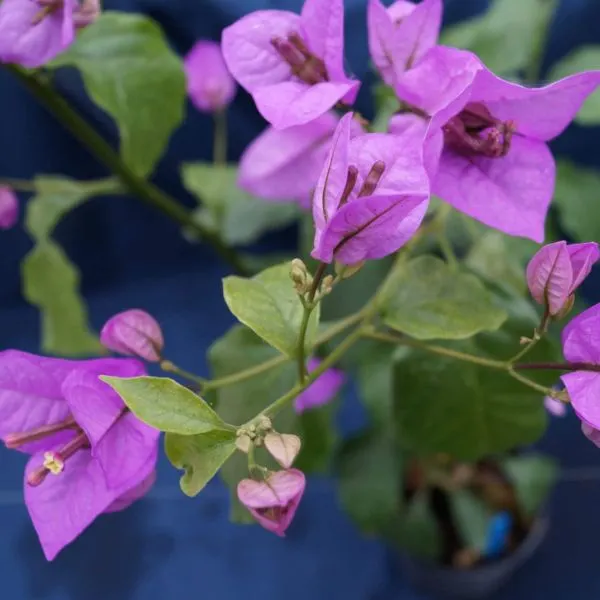

- Color: Lilac to lavender
- Growth habit: Dwarf shrub
- Approximate size: 3–5 ft
- Best use: Pots, patio containers, small hedges
- Container suitability: Excellent
- Thorniness: Medium
Why grow it: Easter Parade is a good pick when you want a softer Bougainvillea color instead of intense red or magenta. It adds lilac color against deep green foliage and is easier to manage than a large climbing vine.
Notes: Use it in a pot, a small hedge, or a compact sunny border. Keep it in strong light and prune lightly to hold a tidy shape.
2. Hugh Evans
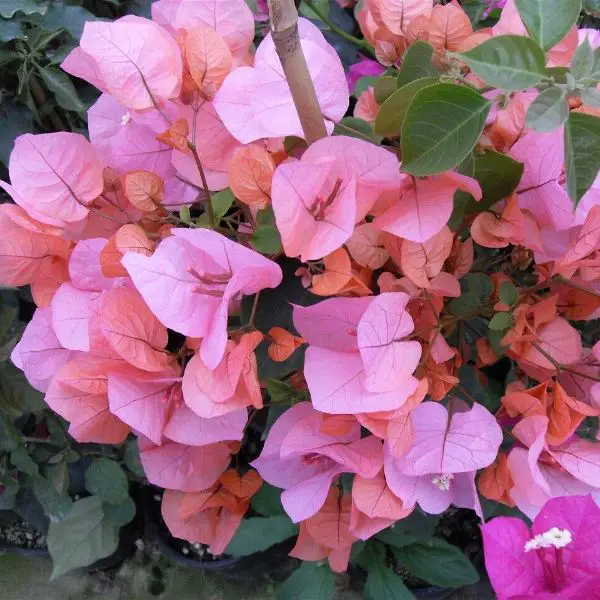
- Color: Pale coral to pink
- Growth habit: Compact shrub
- Approximate size: 3–5 ft
- Best use: Mixed borders, pots, contrast planting
- Container suitability: Good
- Thorniness: Variable
Why grow it: Hugh Evans, often sold as Fair Lady, is useful when you want warm coral-pink color that pairs well with deeper purple, red, or white flowering plants.
Notes: This variety can be described as thorny or lower-thorn depending on nursery stock, so inspect the plant before buying if thorniness matters.
3. James Walker
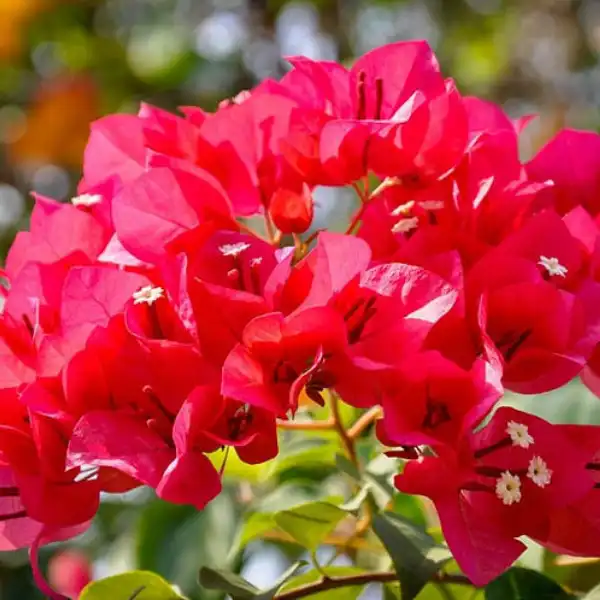
- Color: Hot pink, orange-pink, or reddish purple
- Growth habit: Compact vine or shrub
- Approximate size: 4–12 ft when pruned; larger if trained
- Best use: Pots, baskets, arbors, bonsai-style shaping
- Container suitability: Good
- Thorniness: Medium
Why grow it: James Walker is flexible enough for containers, hanging baskets, and trained displays. It is also a useful variety if you want a bright bract color with a manageable form.
Notes: Because this name is sometimes used for plants trained in different ways, check the plant label for expected mature size.
4. Helen Johnson
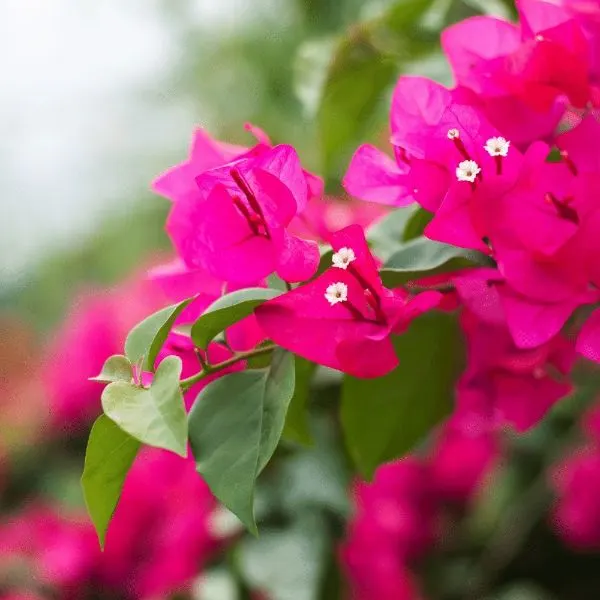
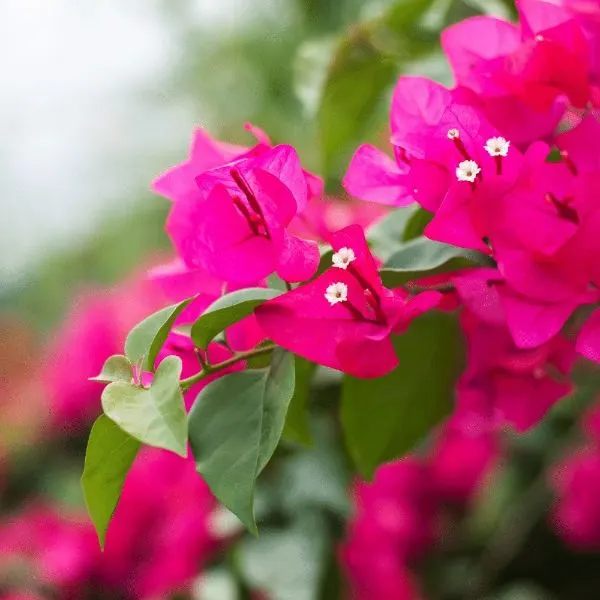
- Color: Pink
- Growth habit: True dwarf shrub
- Approximate size: 2–4 ft
- Best use: Patios, rock gardens, containers, small beds
- Container suitability: Excellent
- Thorniness: Low to medium
Why grow it: Helen Johnson is one of the better Bougainvillea varieties for small gardens because it keeps a compact habit while still producing bright pink bracts.
Notes: Use it where a vigorous wall-covering vine would be too much.
5. Sunvillea Rose
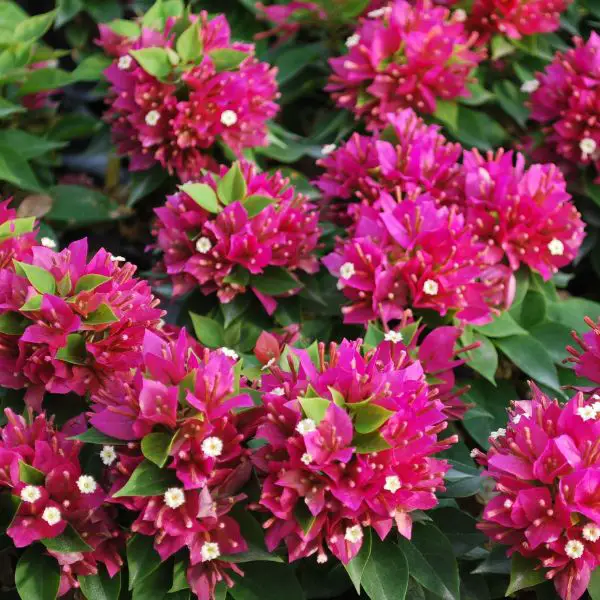
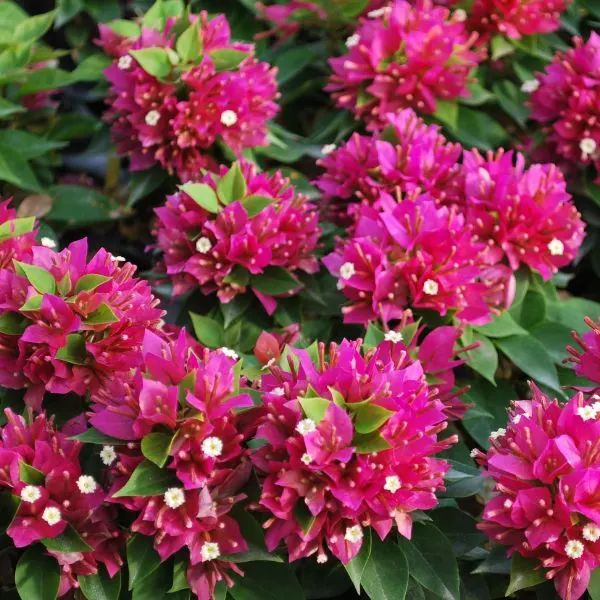
- Color: Rose-pink to magenta
- Growth habit: Dwarf shrub
- Approximate size: 2–3 ft
- Best use: Patio pots, porch displays, small borders
- Container suitability: Excellent
- Thorniness: Medium
Why grow it: Sunvillea Rose gives bright Bougainvillea color in a compact plant, making it helpful for patios, balconies, and small sunny spaces.
Notes: Give it full sun and avoid soggy soil, especially in containers.
6. Pink Pixie
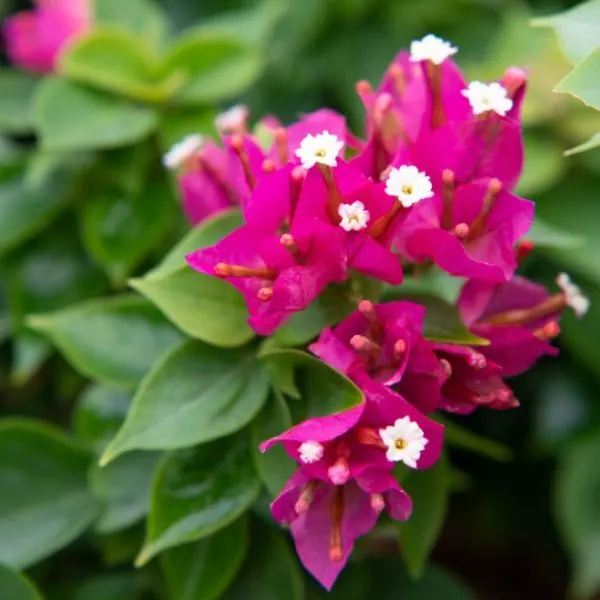
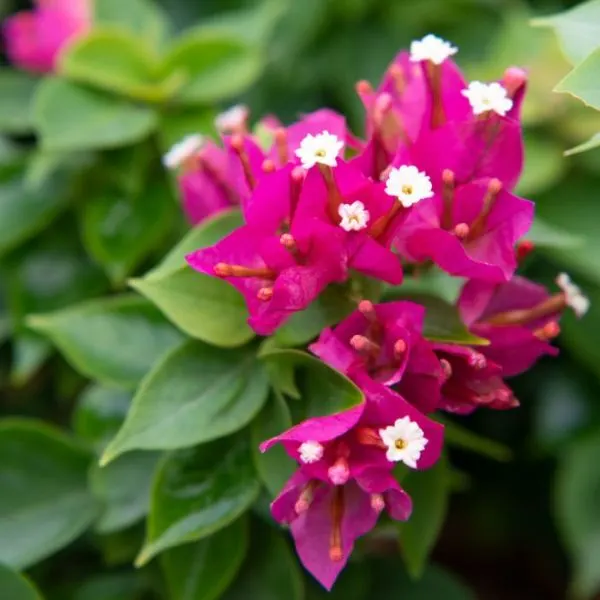
- Color: Pink
- Growth habit: Dense dwarf shrub
- Approximate size: 2–4 ft
- Best use: Containers, edging, small borders
- Container suitability: Excellent
- Thorniness: Medium
Why grow it: Pink Pixie is a strong compact choice if you want dense pink color without committing to a tall vine.
Notes: It works best where the plant can be viewed up close, such as a patio container or sunny entryway.
7. Rosenka
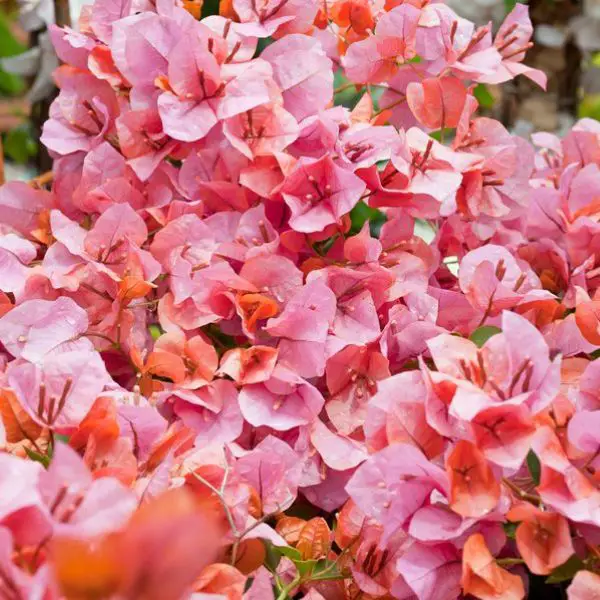
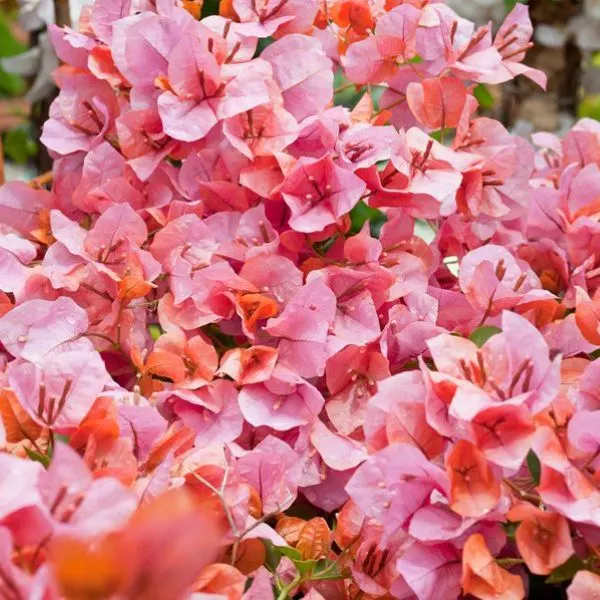
- Color: Gold aging to pink
- Growth habit: Dwarf shrub
- Approximate size: 3–4 ft
- Best use: Pots, poolside color, small borders
- Container suitability: Excellent
- Thorniness: Medium
Why grow it: Rosenka is valuable because the bracts can shift from gold to pink as they age, creating a warm bicolor effect.
Notes: Use it as a feature plant in a pot or in a small border where the color change is easy to see.
8. Yani’s Delight
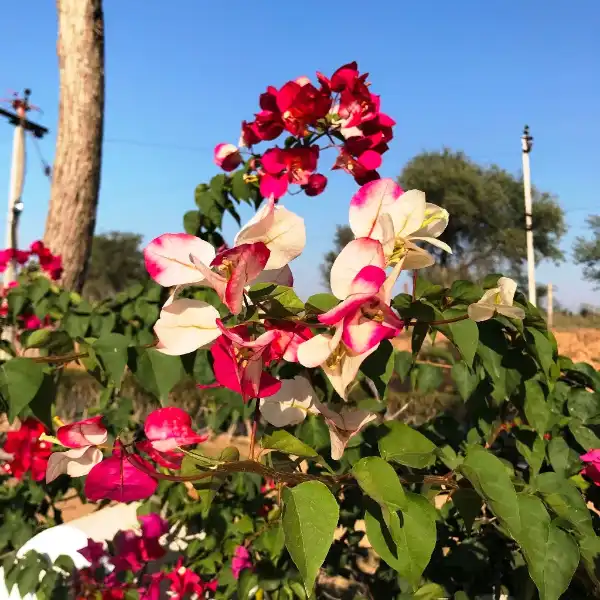
- Color: Pink, violet, and cream tones
- Growth habit: Small shrub
- Approximate size: 2–3 ft
- Best use: Pots, sunny patios, soft-color gardens
- Container suitability: Excellent
- Thorniness: Medium
Why grow it: Yani’s Delight is useful when you want a softer, romantic color palette rather than the intense magenta or red tones of larger Bougainvillea vines.
Notes: It is better for small-space color than for covering a large fence or wall.
9. Crimson Red
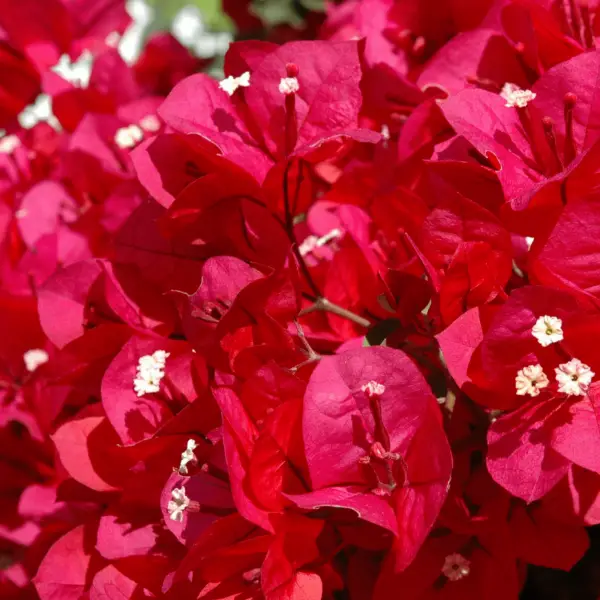
- Color: Crimson red
- Growth habit: Compact climber
- Approximate size: 4–6 ft
- Best use: Arbors, baskets, walls, sunny fences
- Container suitability: Good
- Thorniness: Medium
Why grow it: Crimson Red brings bold red color to the garden without requiring the space of the largest Bougainvillea vines.
Notes: Train young growth early if you want a neat climbing form.
10. Don Fernando
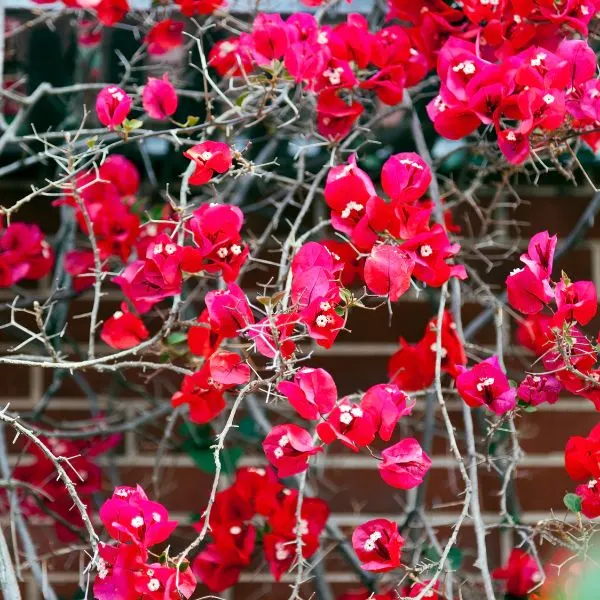
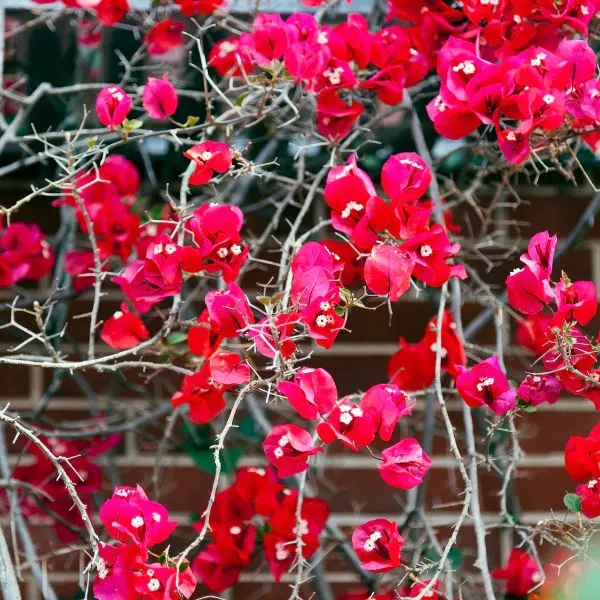
- Color: Tomato red to crimson red
- Growth habit: Vigorous shrub or vine
- Approximate size: 6–12 ft or more
- Best use: Warm borders, large pots, summer color
- Container suitability: Good in large pots
- Thorniness: Medium
Why grow it: Don Fernando is a strong warm-color choice with red-orange intensity and a showy tropical look.
Notes: Give it full sun, good drainage, and enough room to develop.
11. Orange Ice
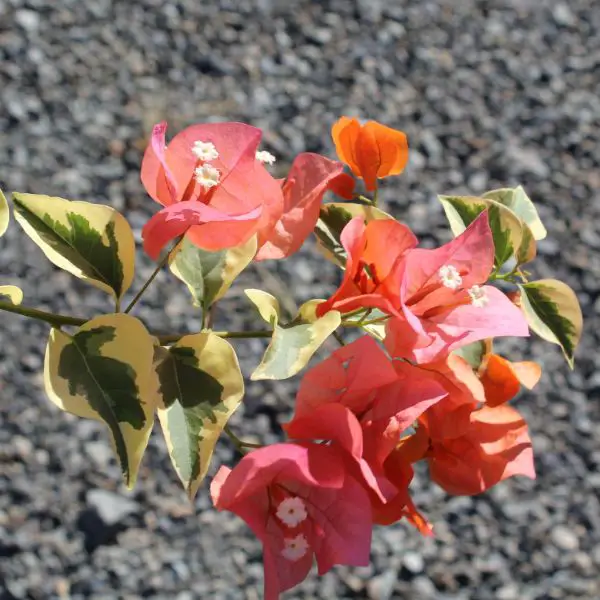
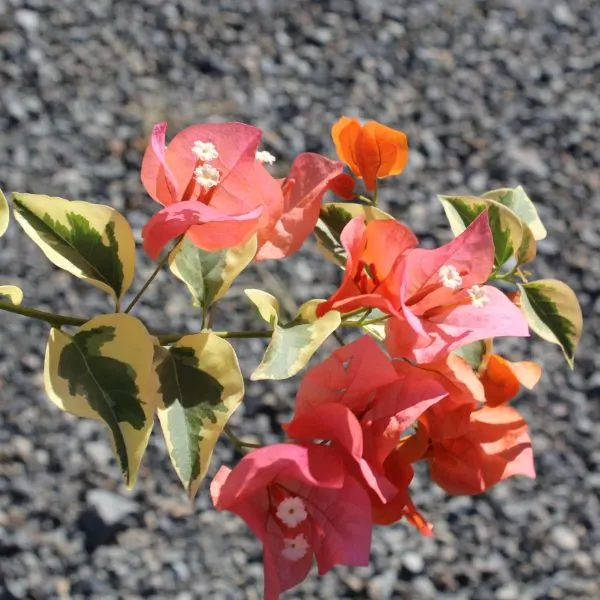
- Color: Orange with variegated foliage
- Growth habit: Trailing vine
- Approximate size: 2–4 ft trailing
- Best use: Hanging baskets, trellises, containers
- Container suitability: Excellent
- Thorniness: Medium
Why grow it: Orange Ice is useful when you want both orange bracts and foliage interest. The variegated leaves help it stand out even between bloom cycles.
Notes: It is especially effective in hanging baskets or containers where the trailing habit can show.
12. Temple Fire
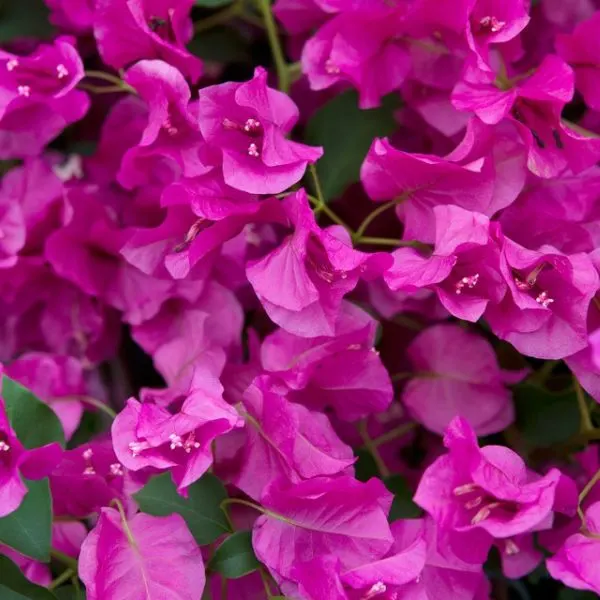
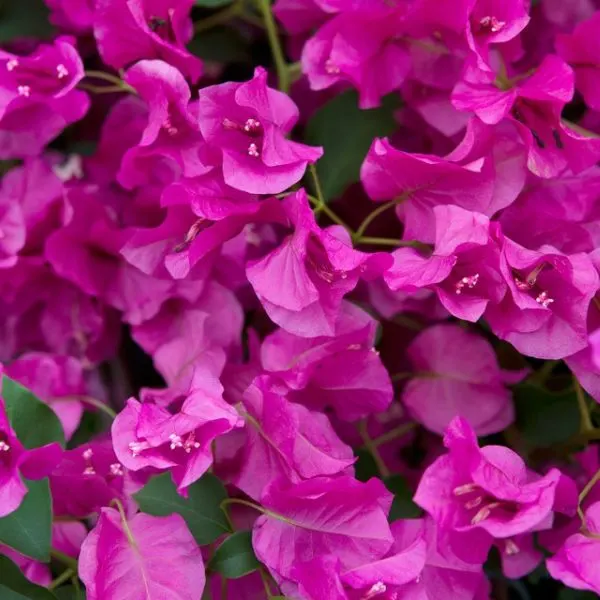
- Color: Fuchsia-pink with warm orange tones
- Growth habit: Dwarf to compact shrub
- Approximate size: 3–5 ft
- Best use: Pots, hedges, baskets, patio displays
- Container suitability: Excellent
- Thorniness: Medium
Why grow it: Temple Fire is a vivid compact Bougainvillea for gardeners who want a bright, tropical effect in a smaller space.
Notes: Use it in full sun for the strongest bract color.
13. Sunvillea Cream
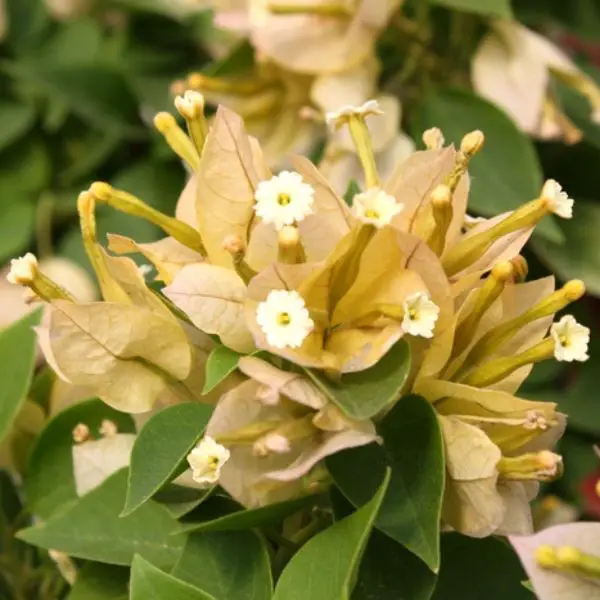
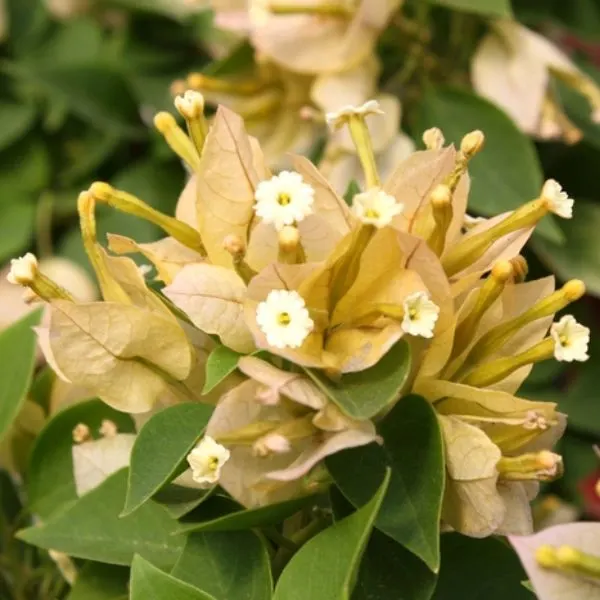
- Color: Cream to pale white
- Growth habit: Dwarf shrub
- Approximate size: 2–3 ft
- Best use: Containers, patios, mixed displays
- Container suitability: Excellent
- Thorniness: Medium
Why grow it: Sunvillea Cream softens a bright Bougainvillea planting and pairs well with purple, magenta, pink, and orange varieties.
Notes: Use it where a light-colored bract will contrast with darker foliage or hardscaping.
Semi-Dwarf Varieties
Semi-dwarf Bougainvillea varieties grow larger than true dwarf types but are still easier to manage than full-size vines. Many can be grown in large pots or trained as compact shrubs with pruning.
14. Royal Purple


- Color: Deep purple
- Growth habit: Shrubby vine
- Approximate size: 5–15 ft
- Best use: Landscape shrubs, fences, sunny borders
- Container suitability: Good in large pots
- Thorniness: Medium
Why grow it: Royal Purple is a strong choice for saturated purple color and can be trained as a shrub-like form or vine depending on pruning.
Notes: Give it full sun and regular shaping if you want it to stay compact.
15. Purple Queen
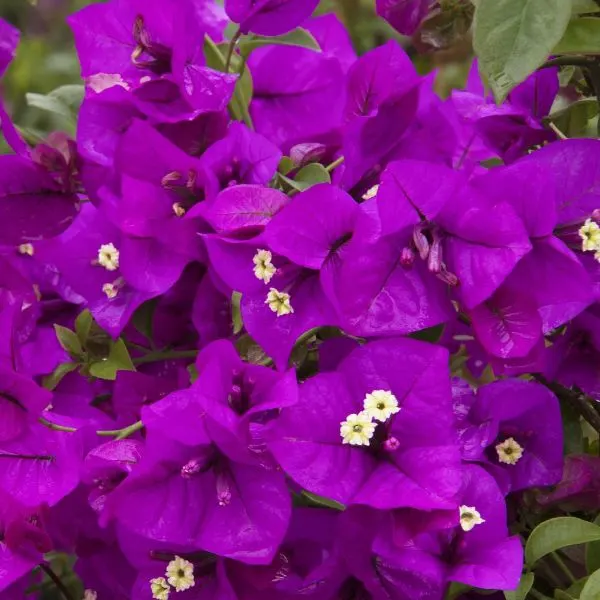
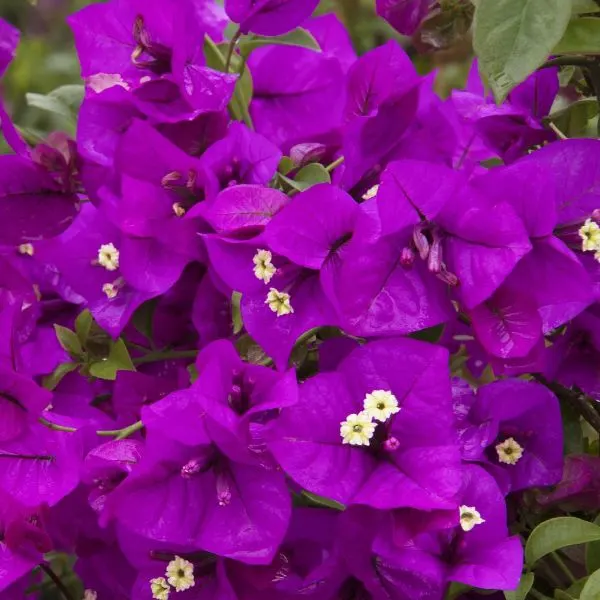
- Color: Deep purple to violet
- Growth habit: Semi-dwarf vine or upright shrub-like form
- Approximate size: 10–15 ft
- Best use: Walls, fences, trellises, arbors
- Container suitability: Good in large pots
- Thorniness: Medium
Why grow it: Purple Queen is one of the more dramatic purple Bougainvillea options and works well when trained over a support.
Notes: Often listed as Moneth. Confirm mature size and thorn level with the nursery label.
16. Vera Deep Purple
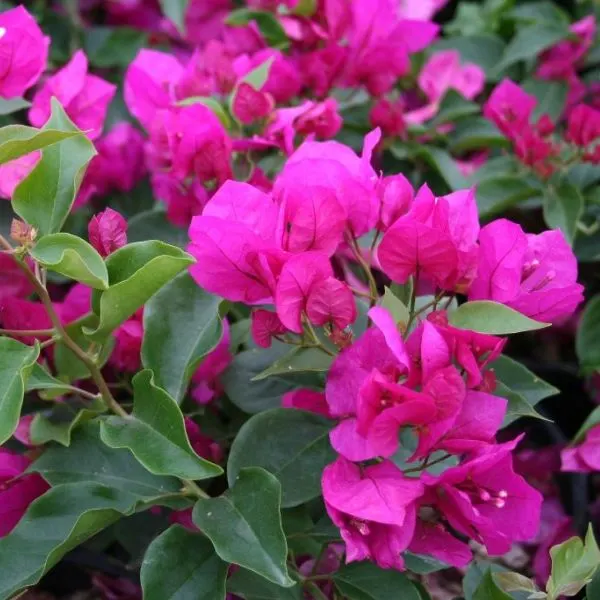
- Color: Fuchsia to deep purple
- Growth habit: Semi-dwarf shrub
- Approximate size: About 4 ft
- Best use: Pots, porches, small patios
- Container suitability: Excellent
- Thorniness: Medium
Why grow it: Vera Deep Purple gives strong color in a manageable size and responds well to pruning.
Notes: It is a good option for a container where a large wall vine would be too aggressive.
17. Imperial Delight
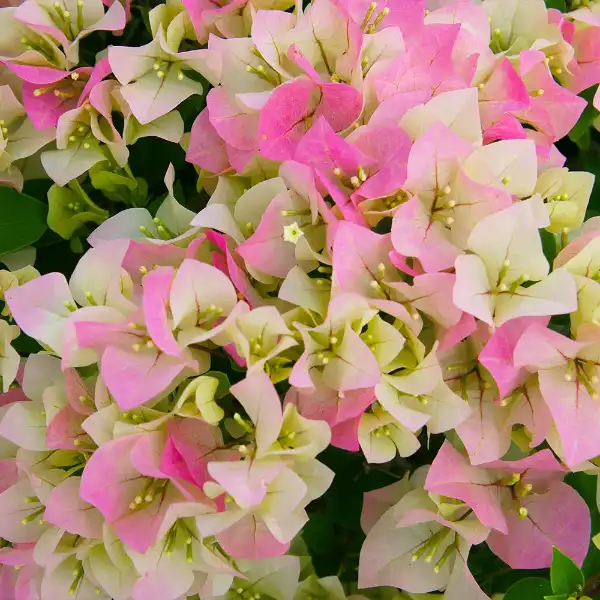
- Color: White aging to soft pink
- Growth habit: Semi-dwarf to medium vine
- Approximate size: 10–20 ft
- Best use: Arbors, trellises, large containers
- Container suitability: Good in large pots
- Thorniness: Medium
Why grow it: Imperial Delight creates a soft bicolor look as the bracts mature from white to pink.
Notes: It is a good choice when you want a gentler look than red, purple, or magenta varieties.
18. Paper Flower
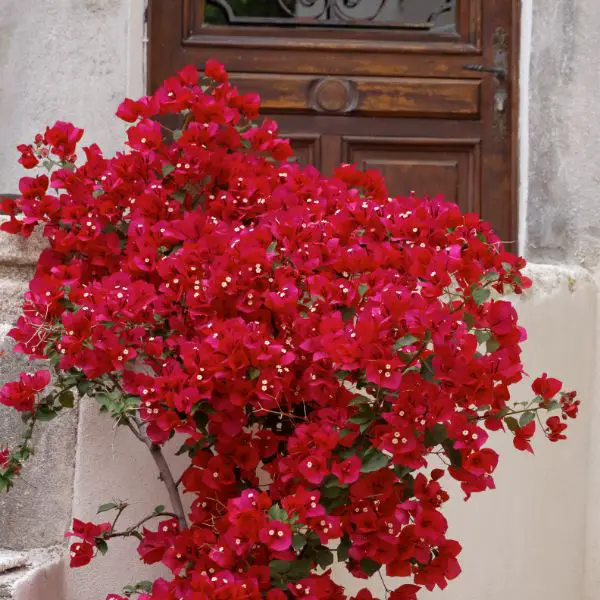
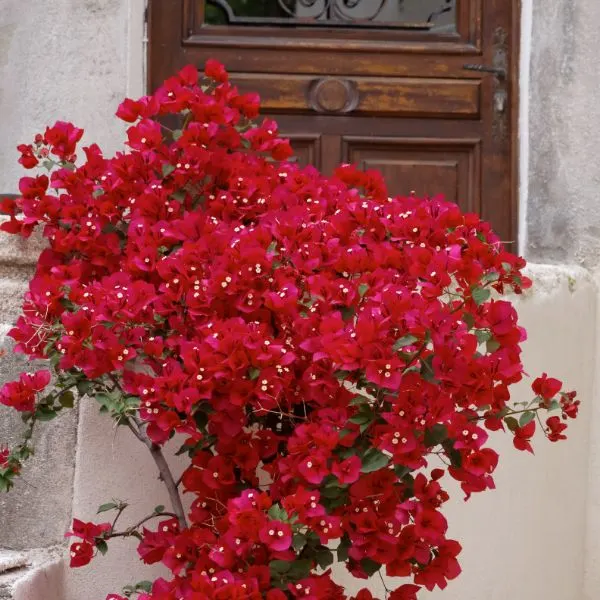
- Color: Magenta to red
- Growth habit: Woody climber
- Approximate size: 15–30 ft
- Best use: Bonsai, walls, trellises
- Container suitability: Good in large containers
- Thorniness: High
Why grow it: Paper Flower is a classic Bougainvillea type often associated with Bougainvillea glabra, one of the most commonly grown ornamental forms.
Notes: It can become large in warm climates, so plan for pruning and support.
Large and Extra-Large Varieties
Large Bougainvillea varieties are best for walls, fences, arbors, trellises, privacy screens, and warm-climate landscapes with enough room for pruning and support.
19. Great Bougainvillea
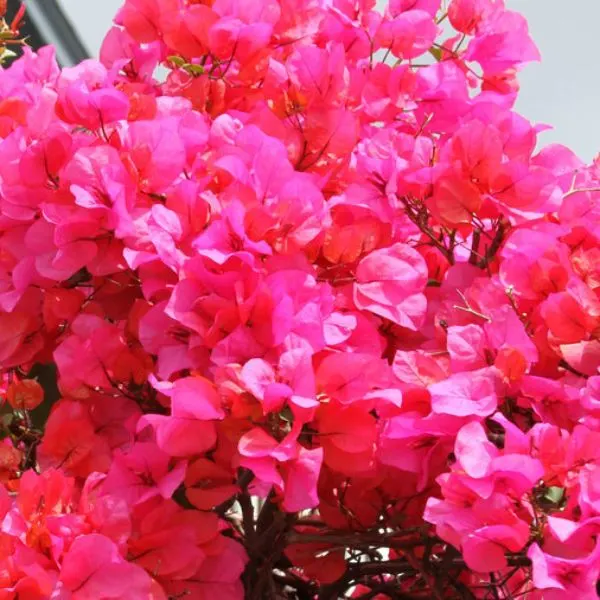
- Color: Purple to magenta
- Growth habit: Large woody vine
- Approximate size: 15–40 ft
- Best use: Large walls, fences, screens
- Container suitability: Only very large tubs
- Thorniness: High
Why grow it: Great Bougainvillea is for gardeners with the room and support for a large, dramatic vine.
Notes: It is not the best choice for a tiny balcony or narrow walkway.
20. James Walker
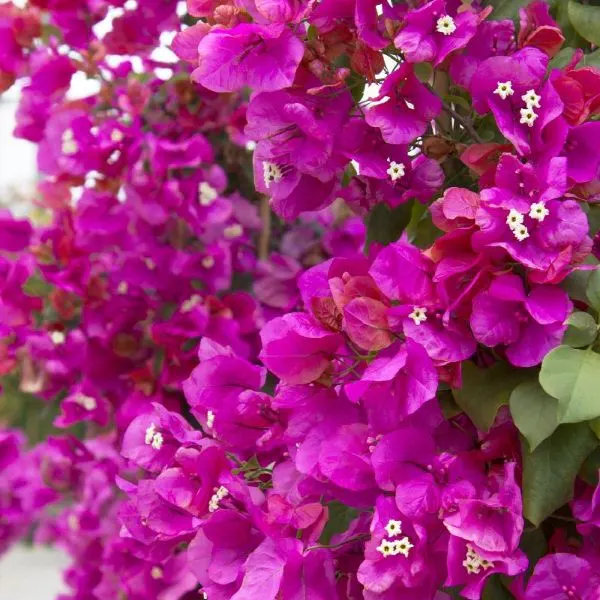
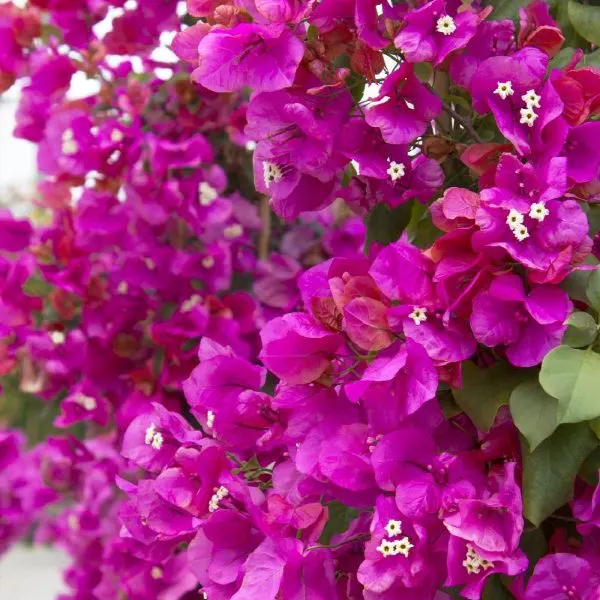
- Color: Reddish purple with pale centers
- Growth habit: Trained vine or large shrub
- Approximate size: Can be trained larger
- Best use: Garden structures, entryways, arbors
- Container suitability: Good in large pots
- Thorniness: Medium
Why grow it: This second James Walker entry is best treated as a larger trained form rather than a separate cultivar. It is useful when the plant is allowed to climb or spread more than a compact pot specimen.
Notes: Because James Walker appeared twice in the original article, keep this section only if you want to preserve the original 40-image sequence. Otherwise, merge it with item 3.
21. Texas Dawn
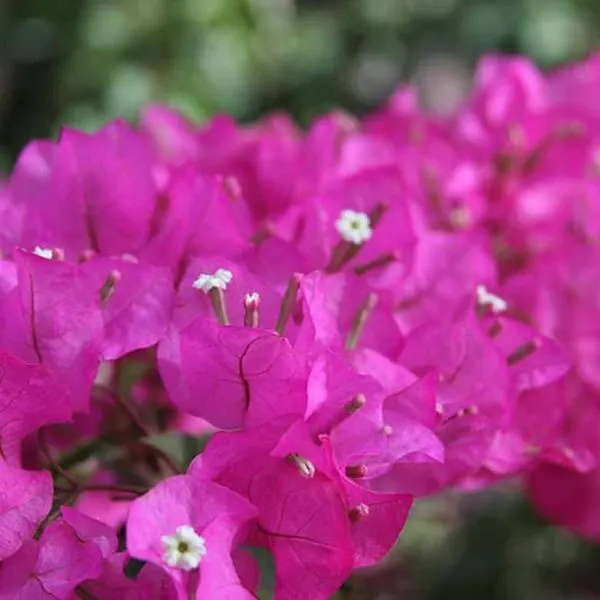
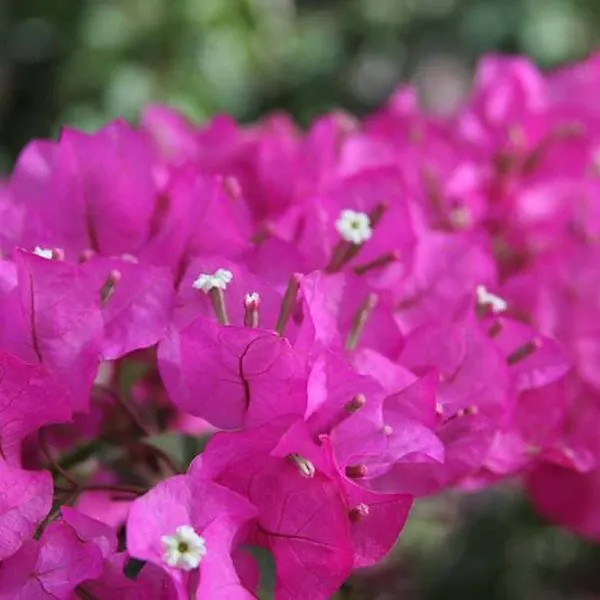
- Color: Light pink to deeper pink
- Growth habit: Vigorous vine
- Approximate size: 10–20 ft
- Best use: Walls, fences, garden backdrops
- Container suitability: Good in large pots
- Thorniness: Medium
Why grow it: Texas Dawn is a good pink variety for gardeners who want a softer color on a larger structure.
Notes: Train it early if you want even coverage across a fence, wall, or trellis.
22. Bougainvillea × buttiana
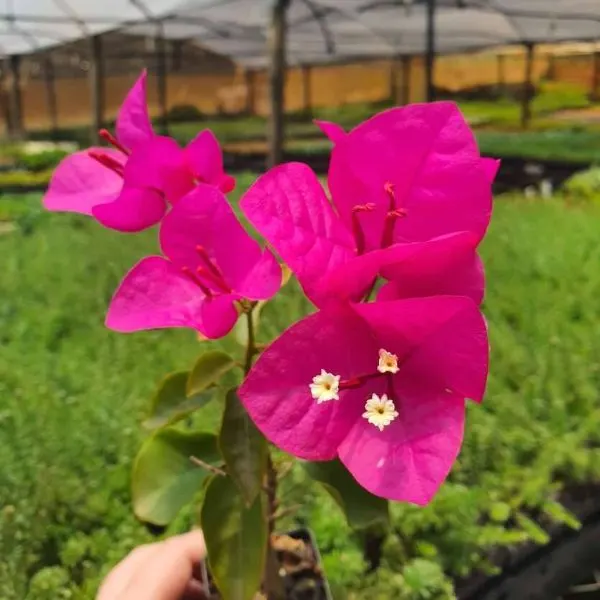
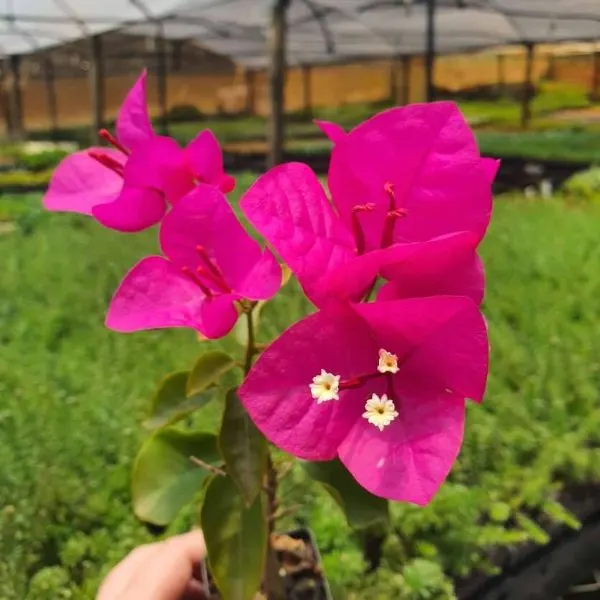
- Color: Magenta, rose, or red-toned bracts
- Growth habit: Hybrid vine
- Approximate size: 15–30 ft
- Best use: Warm-climate landscapes, walls, large trellises
- Container suitability: Good in large pots
- Thorniness: Medium to high
Why grow it: Bougainvillea × buttiana is an important hybrid group behind many garden Bougainvillea selections.
Notes: This is a hybrid group rather than a single decorative cultivar, so expect variation.
23. Barbara Karst
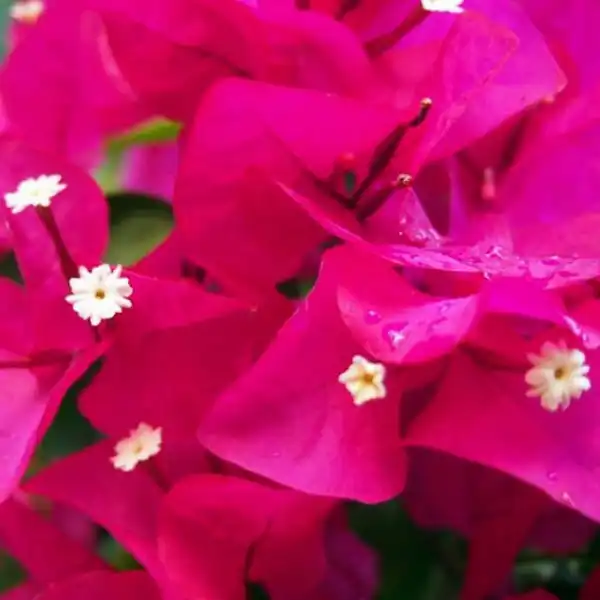
- Color: Magenta-red to bright red
- Growth habit: Vigorous vine
- Approximate size: 20–30 ft or more
- Best use: Arbors, walls, banks, fences
- Container suitability: Good in large pots
- Thorniness: High
Why grow it: Barbara Karst is one of the best-known Bougainvillea varieties because it is vigorous, colorful, and widely sold.
Notes: Use the spelling Barbara Karst. Give it strong support and enough room to grow.
24. Lady Baring / Hawaiian Gold
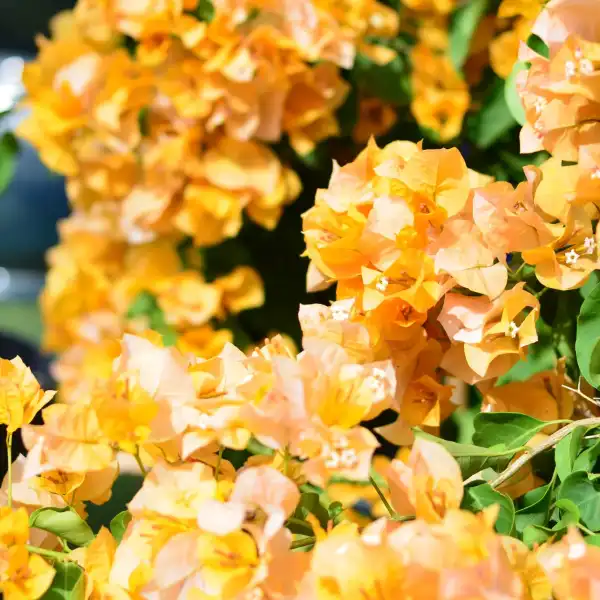
- Color: Bright yellow to gold
- Growth habit: Large vine
- Approximate size: 20–30 ft
- Best use: Sunny walls, fences, tropical-style landscapes
- Container suitability: Good in large pots
- Thorniness: High
Why grow it: Lady Baring, often associated with Hawaiian Gold or Yellow Glory naming, is a useful selection when you want golden Bougainvillea color.
Notes: Yellow and gold Bougainvillea varieties look especially good against white walls and terracotta pots.
25. Orange King
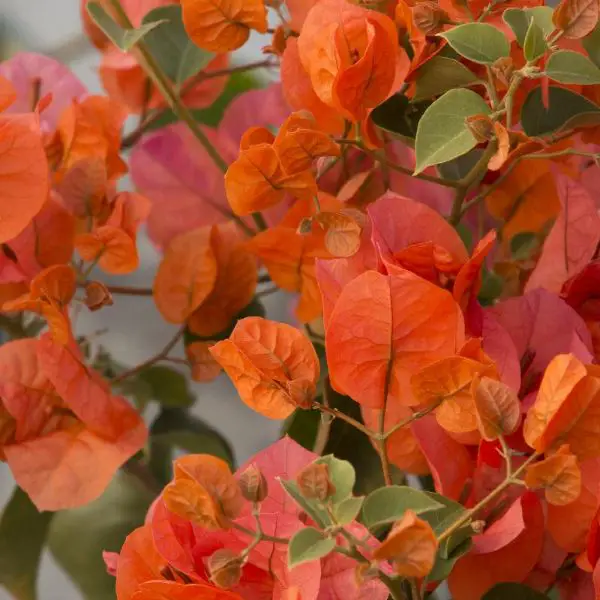
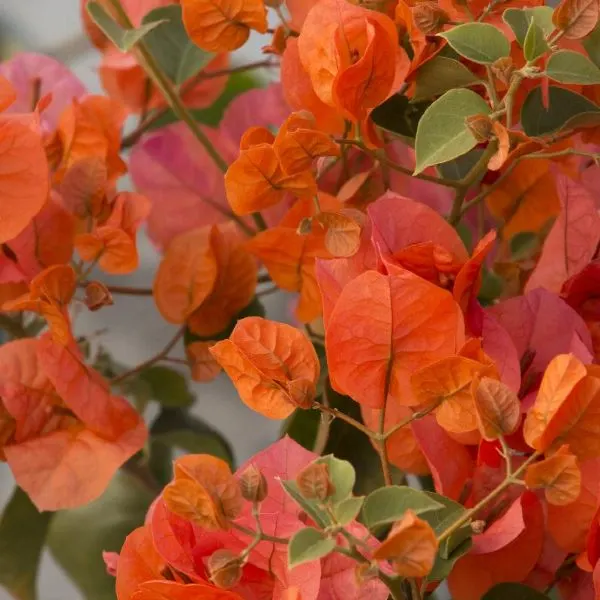
- Color: Orange to orange-red
- Growth habit: Large vine
- Approximate size: 10–30 ft
- Best use: Fences, warm walls, Mediterranean-style gardens
- Container suitability: Good in large pots
- Thorniness: High
Why grow it: Orange King is a strong choice if you want warm orange color instead of the more common magenta or purple.
Notes: Use it as a focal plant in hot, sunny spaces.
26. Gold Rush
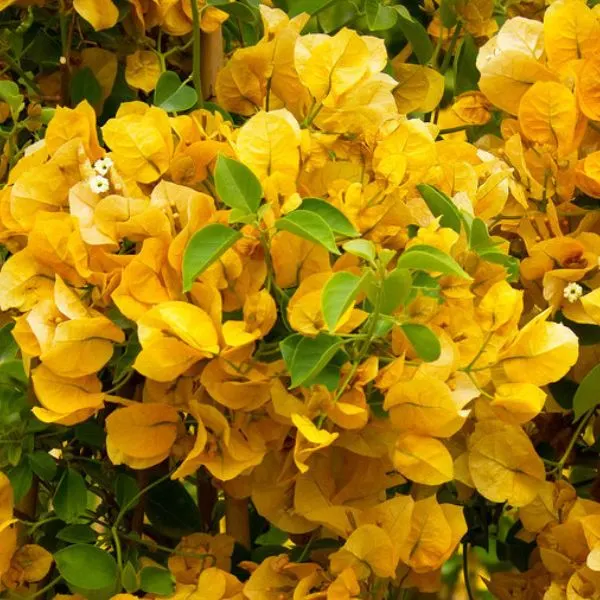
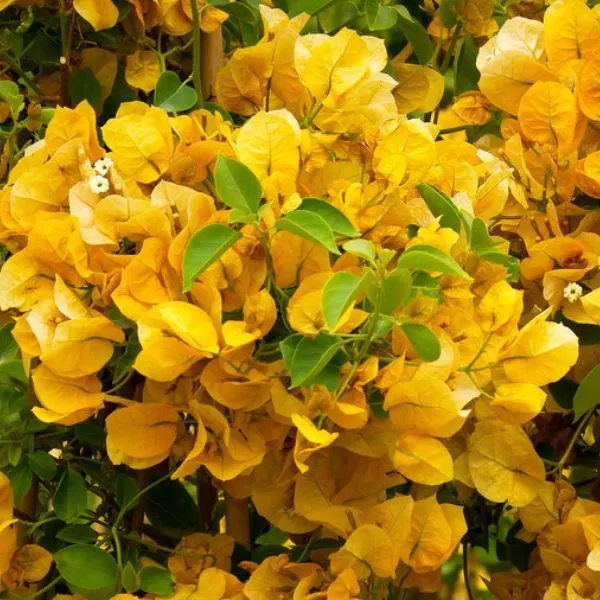
- Color: Yellow to gold
- Growth habit: Shrubby vine
- Approximate size: 10–20 ft
- Best use: Warm borders, walls, large containers
- Container suitability: Good in large pots
- Thorniness: Medium
Why grow it: Gold Rush adds bright yellow color that contrasts well with purple, red, and white Bougainvillea varieties.
Notes: Avoid too much shade, which can reduce bract display.
27. White Stripe
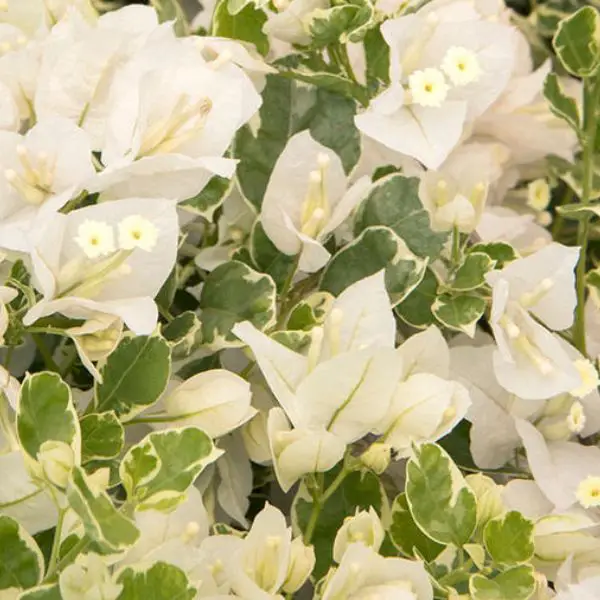
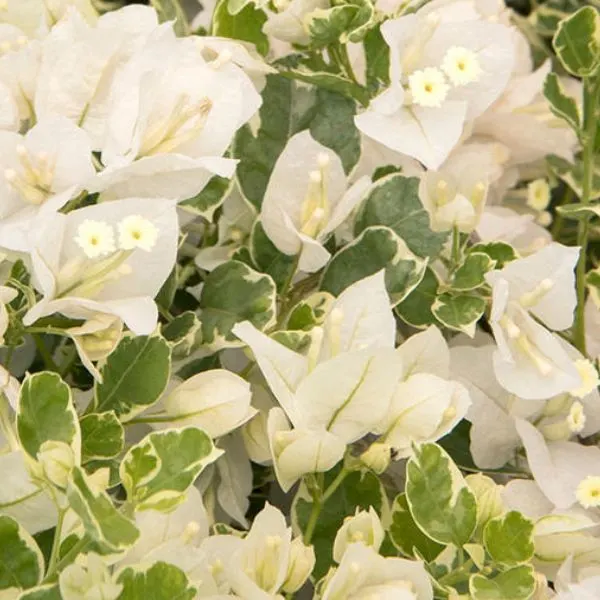
- Color: White to cream with variegated foliage
- Growth habit: Vine
- Approximate size: 8–20 ft
- Best use: Foliage contrast, walls, groundcover, mixed plantings
- Container suitability: Good in large pots
- Thorniness: Medium
Why grow it: White Stripe is valuable because the foliage adds interest even when the bracts are not at peak color.
Notes: Use it where variegated leaves can brighten a planting scheme.
Lower-Thorn, Specialty, and Unusual Varieties
The original article grouped several of these as thornless varieties. A safer way to describe them is lower-thorn, specialty, or unusual selections, because Bougainvillea thorniness can vary by plant, age, and nursery stock.
28. New River
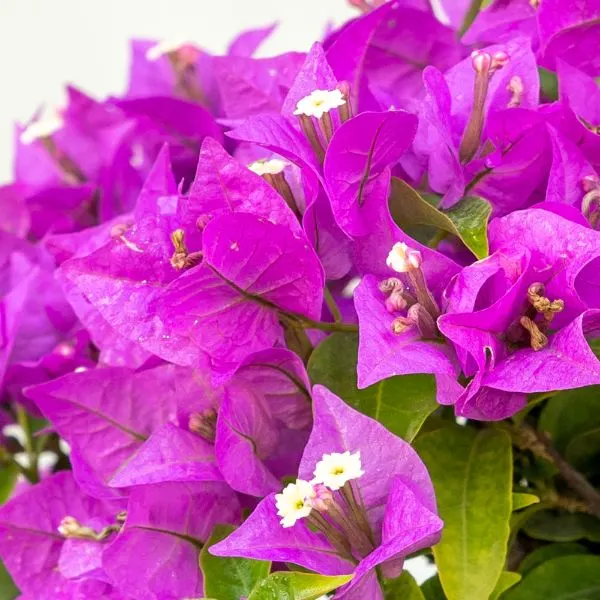
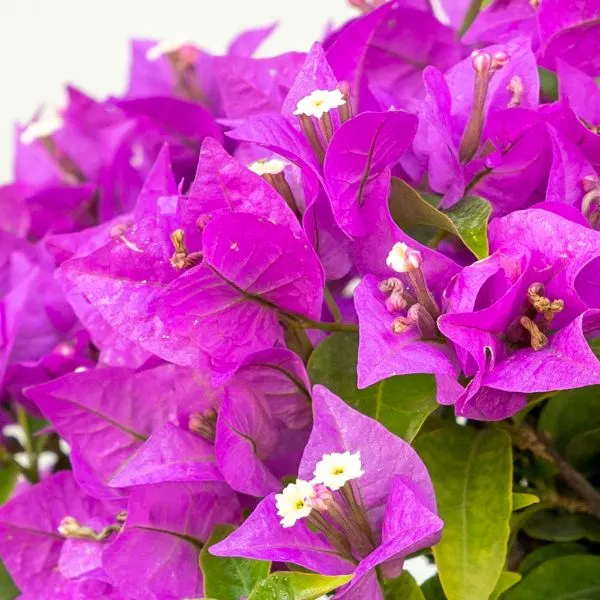
- Color: Intense purple
- Growth habit: Large vine
- Approximate size: 20–40 ft
- Best use: Large walls, screens, bonsai training if pruned hard
- Container suitability: Large pots only
- Thorniness: Medium to high
Why grow it: New River is a good option for gardeners who want a strong purple Bougainvillea with a vigorous habit.
Notes: Do not plant it where a small dwarf variety would be more practical.
29. Purple Queen / Moneth
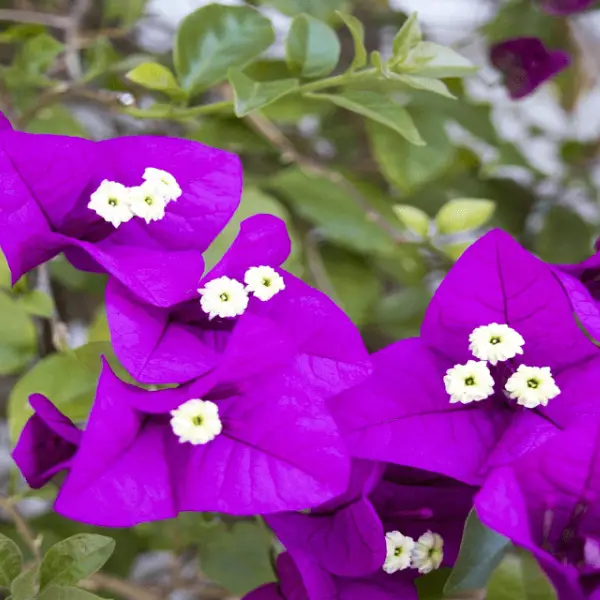
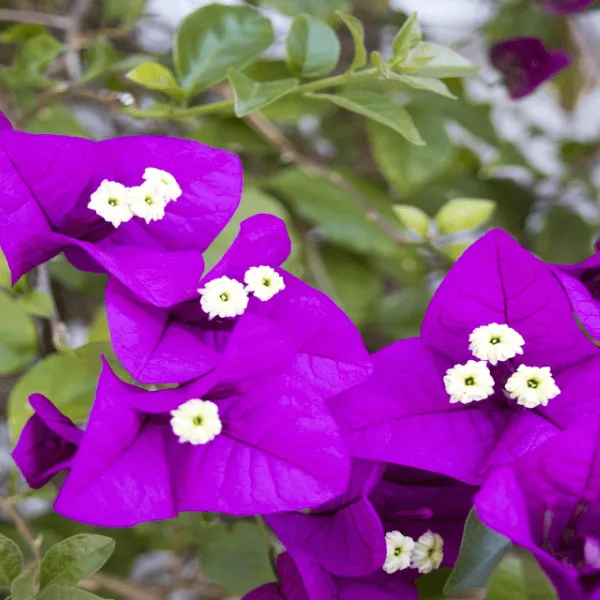
- Color: Deep purple
- Growth habit: Upright shrub-like vine
- Approximate size: 15–20 ft when trained
- Best use: Fences, arbors, warm-climate annual color
- Container suitability: Large pots
- Thorniness: Variable
Why grow it: This section preserves the second Purple Queen image from the original article. Use it to emphasize the upright, trained form rather than introducing it as a completely separate plant from item 15.
Notes: If you want a cleaner article, merge this entry with item 15. If you want to keep one image per original item, keep both and make the distinction clear.
30. Elizabeth Angus
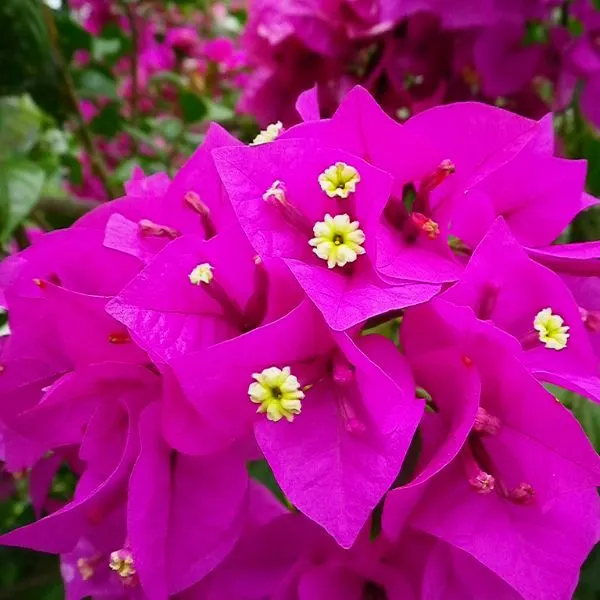
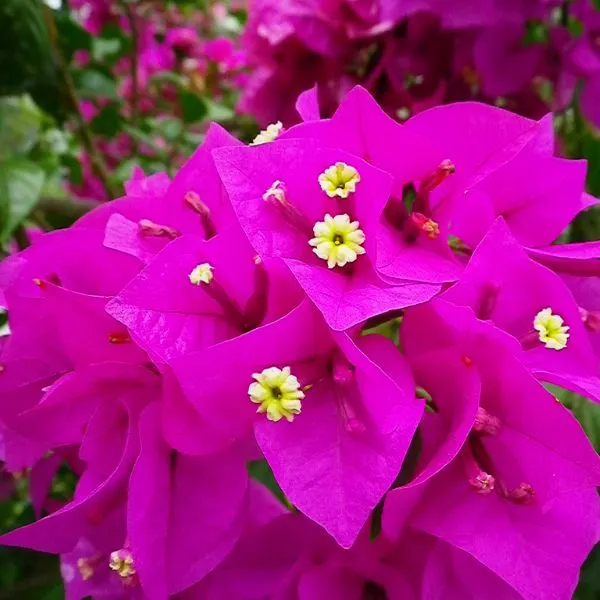
- Color: Violet to magenta
- Growth habit: Shrubby vine
- Approximate size: 12–15 ft
- Best use: Arbors, groundcover, sunny fences
- Container suitability: Good in large pots
- Thorniness: Medium
Why grow it: Elizabeth Angus is a useful purple-violet option for gardeners who want strong color without choosing a red cultivar.
Notes: It can be pruned into a more controlled form if needed.
31. Rosa Preciosa
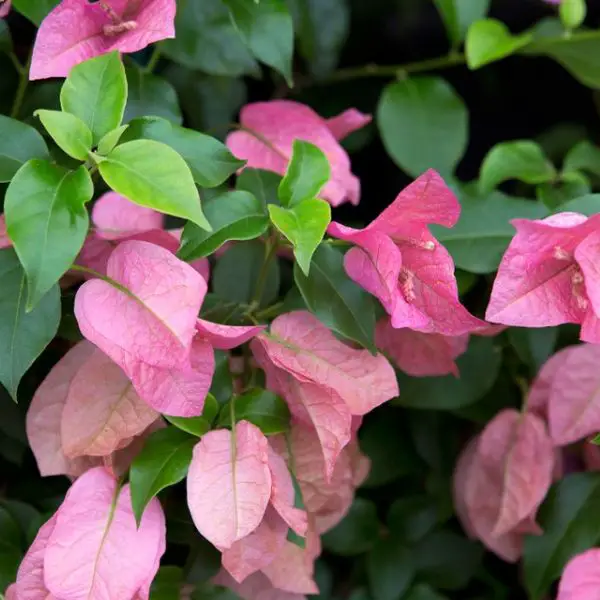
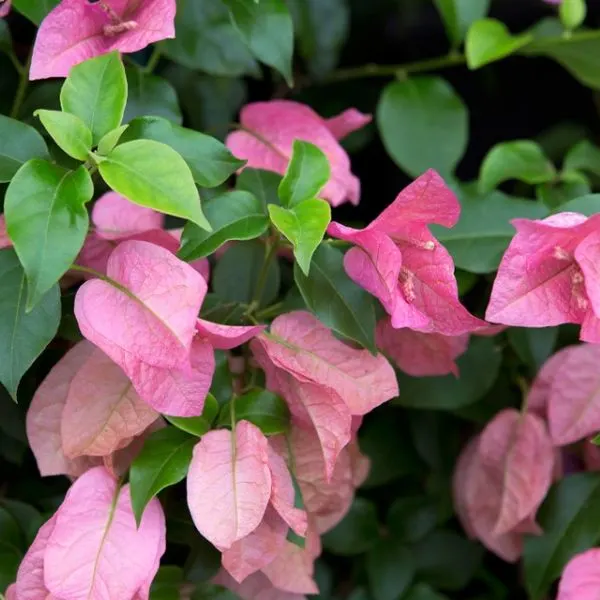
- Color: Pink
- Growth habit: Medium vine or shrub
- Approximate size: 8–16 ft
- Best use: Large pots, sunny patios, warm outdoor spaces
- Container suitability: Good in large pots
- Thorniness: Medium
Why grow it: Rosa Preciosa brings a gentler pink display than the brightest magenta varieties.
Notes: It is best used where it can get full sun and good drainage.
32. Miami Pink
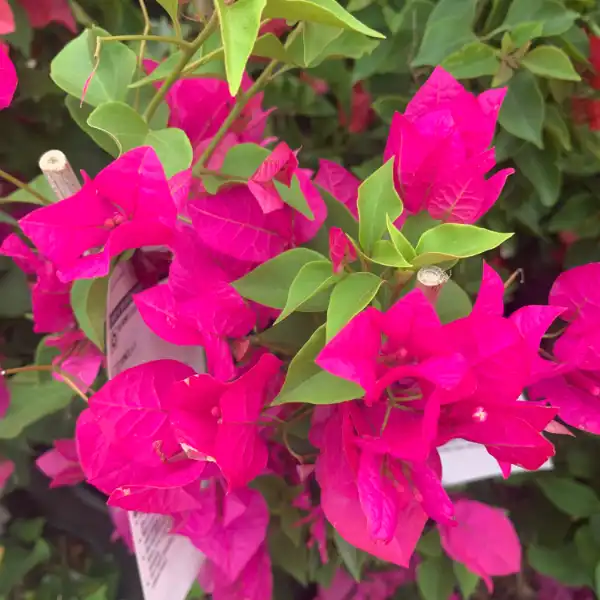
- Color: Hot pink
- Growth habit: Large vine
- Approximate size: 20–30 ft
- Best use: Entryways, large arbors, warm walls
- Container suitability: Good in large pots
- Thorniness: High
Why grow it: Miami Pink is for gardeners who want vivid pink Bougainvillea color on a larger plant.
Notes: Use it where the plant has room to spread and can be pruned safely.
33. Juanita Hatten
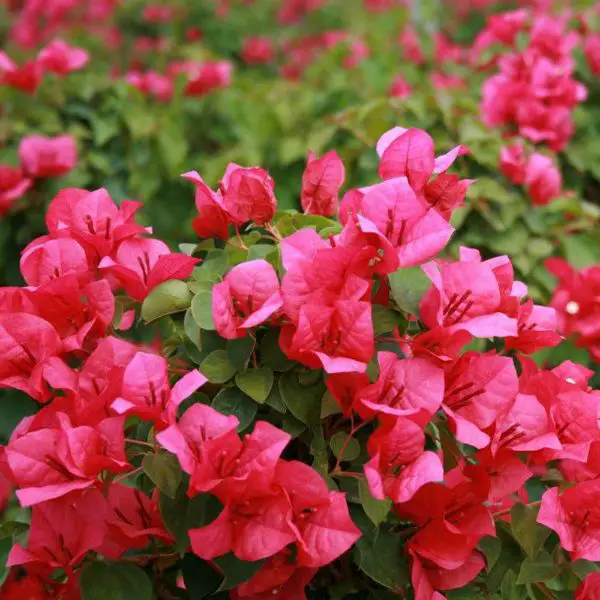
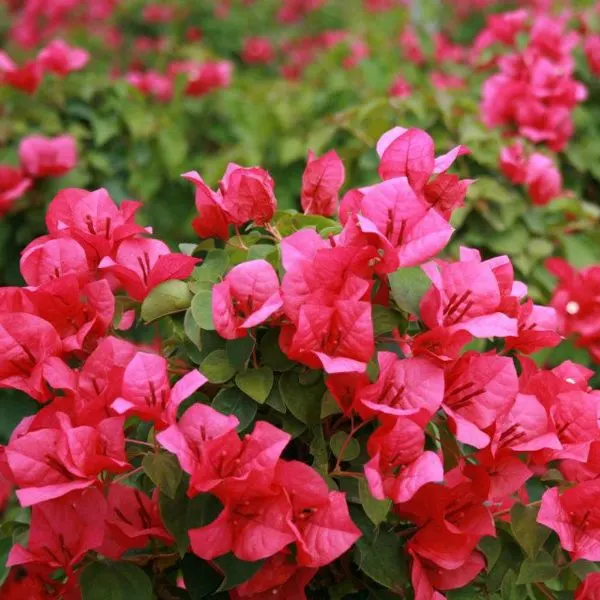
- Color: Deep red
- Growth habit: Large vine
- Approximate size: 20–40 ft
- Best use: Privacy screens, borders, walls, large structures
- Container suitability: Very large tubs only
- Thorniness: High
Why grow it: Juanita Hatten is useful where you want a bold red Bougainvillea with strong landscape presence.
Notes: Keep it away from narrow paths unless you are prepared to prune it regularly.
34. Rainbow Gold
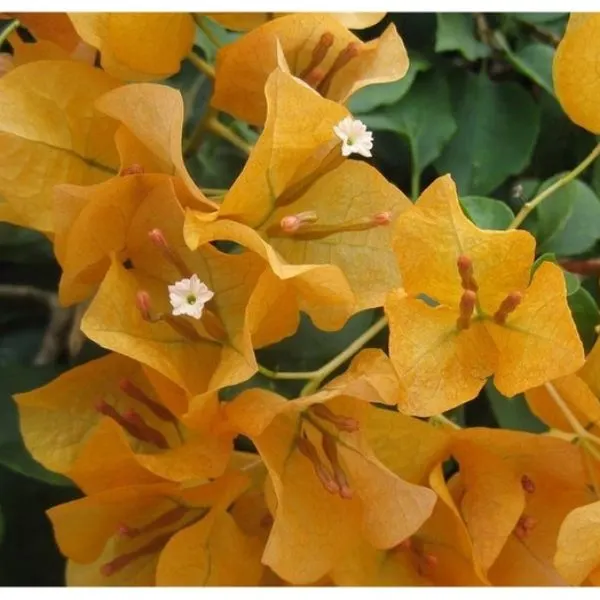
- Color: Apricot, peach, orange, and gold tones
- Growth habit: Medium to large vine
- Approximate size: 10–20 ft
- Best use: Walls, fences, feature containers
- Container suitability: Good in large pots
- Thorniness: Medium
Why grow it: Rainbow Gold is a good choice if you want a multicolor effect rather than one flat bract color.
Notes: Use it as a feature plant where the color variation can be appreciated.
35. Sundown Orange
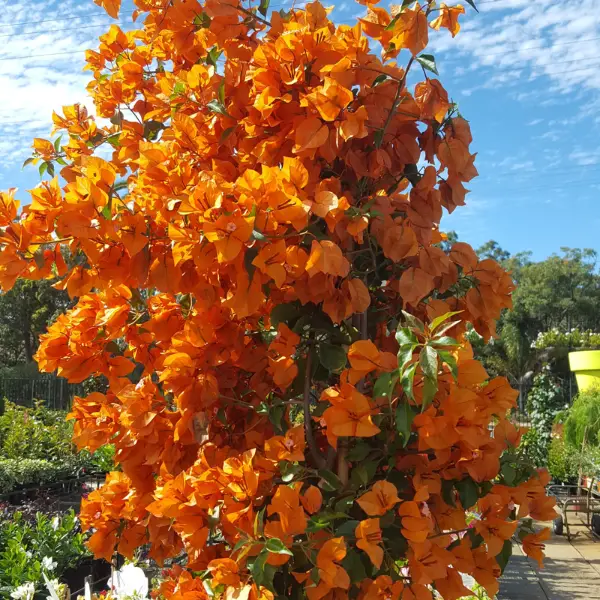
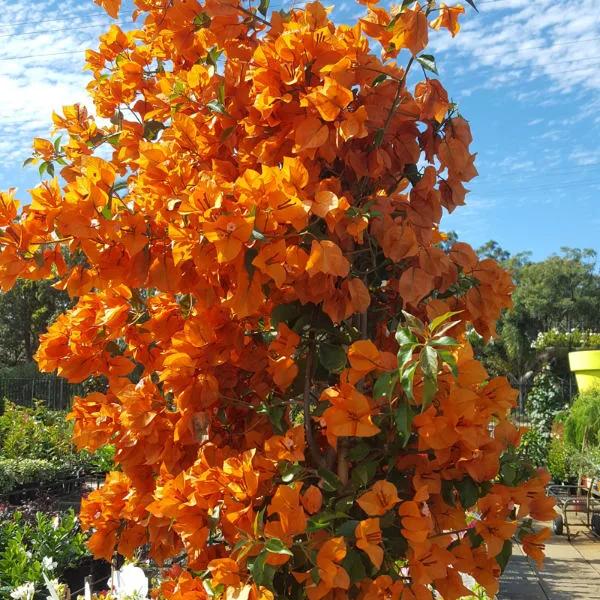
- Color: Orange shifting to yellow and salmon-pink
- Growth habit: Large vine
- Approximate size: 10–30 ft
- Best use: Trellises, fences, walls, large containers
- Container suitability: Good in large pots
- Thorniness: Medium
Why grow it: Sundown Orange is one of the best choices if you want a color-changing Bougainvillea with warm tones.
Notes: Its shifting color looks especially good near neutral walls or simple hardscaping.
36. Afterglow
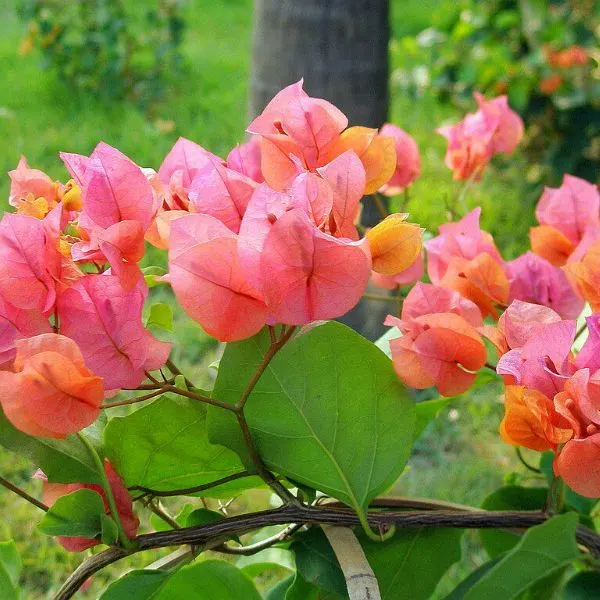
- Color: Yellow and orange
- Growth habit: Large vine
- Approximate size: 20–40 ft
- Best use: Mass planting, walls, fences, sunny borders
- Container suitability: Good in large pots
- Thorniness: Medium to high
Why grow it: Afterglow creates a warm yellow-orange display that stands out from common magenta types.
Notes: It needs space and strong light to look its best.
37. California Gold
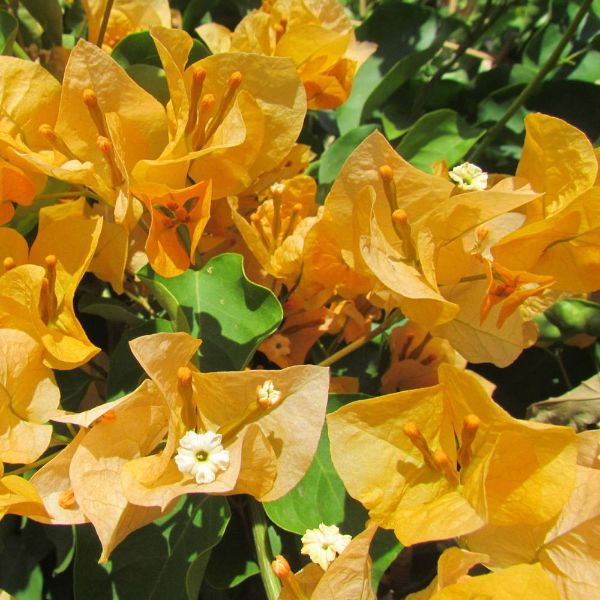
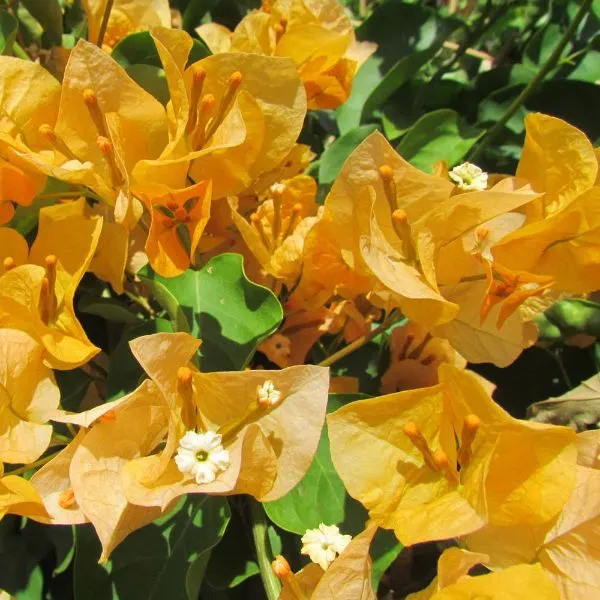
- Color: Gold aging to orange-bronze
- Growth habit: Shrubby vine
- Approximate size: 15–30 ft
- Best use: Warm-climate gardens, large containers, sunny walls
- Container suitability: Good in large pots
- Thorniness: Medium
Why grow it: California Gold is a strong yellow-gold option for gardeners who want warm color without using red or purple.
Notes: It pairs well with terracotta, white walls, and dark green foliage.
38. Miss Alice / Singapore White
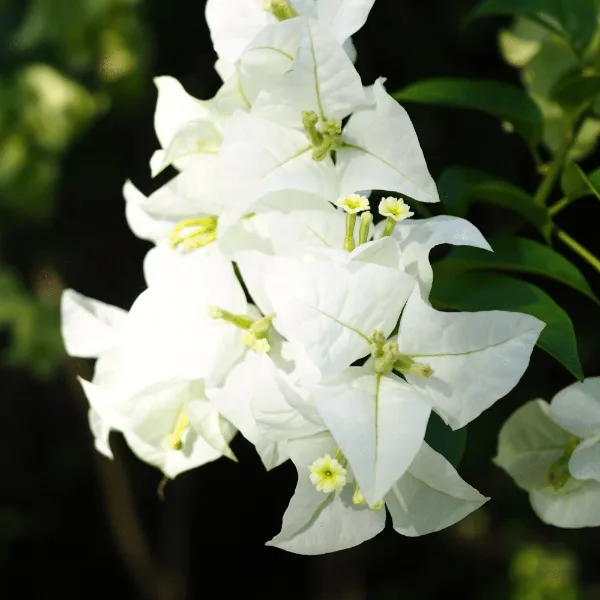
- Color: White
- Growth habit: Semi-dwarf shrub
- Approximate size: 2–5 ft
- Best use: Containers, mass planting, groundcover, patios
- Container suitability: Excellent
- Thorniness: Low to nearly thornless, depending on plant
Why grow it: Miss Alice is one of the best Bougainvillea choices for white bracts and a more manageable habit.
Notes: Even Bougainvillea sold as thornless should be checked before planting near walkways.
39. Mary Palmer’s Enchantment
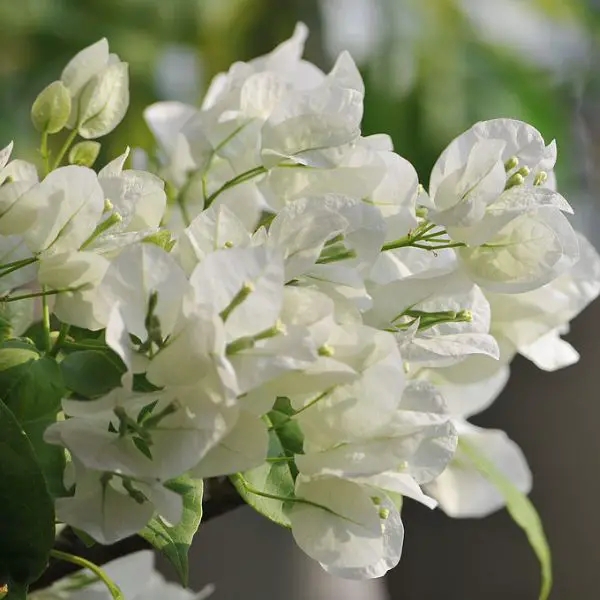
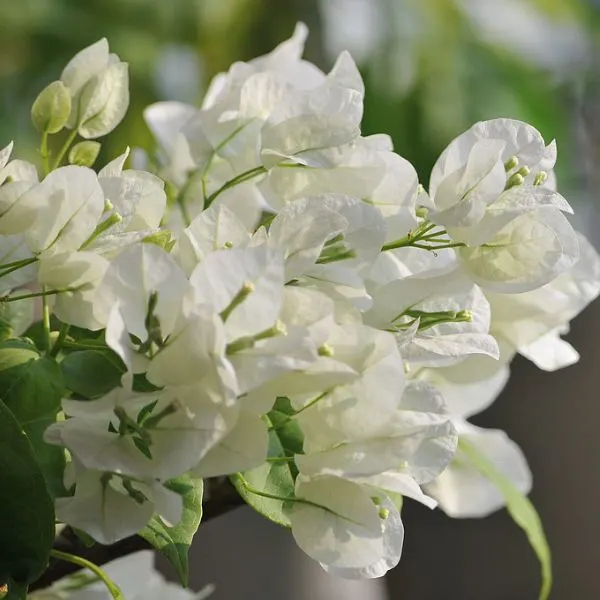
- Color: White to pale tones
- Growth habit: Climbing vine
- Approximate size: 8–20 ft
- Best use: Trellises, arbors, patios, fences
- Container suitability: Good in large pots
- Thorniness: Medium
Why grow it: Mary Palmer’s Enchantment gives a lighter, elegant look that contrasts well with darker walls, foliage, or structures.
Notes: Train it on a support if you want the vine to cover a vertical surface.
Cold-Tolerant Selection
Bougainvillea is generally frost-sensitive, but some vigorous types are commonly chosen by gardeners who want a tougher landscape plant in warm regions with occasional cool weather.
40. San Diego Red
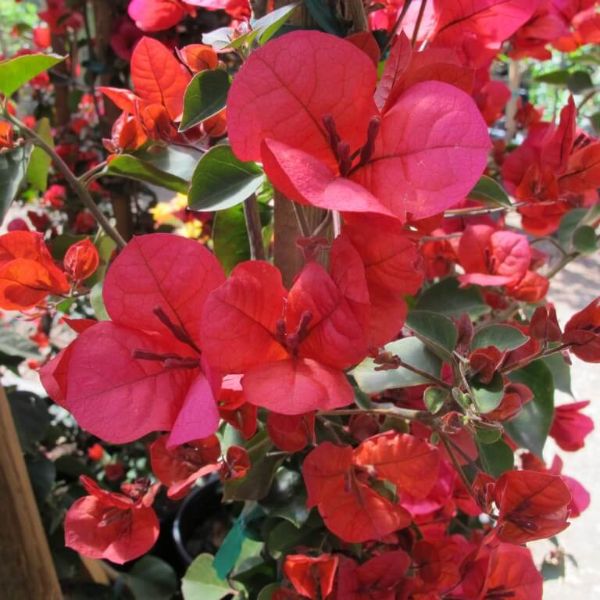
- Color: Deep red to orange-red
- Growth habit: Vigorous vine
- Approximate size: 15–30 ft
- Best use: Walls, trellises, hedges, warm-climate structures
- Container suitability: Good in large pots
- Thorniness: High
Why grow it: San Diego Red is a strong red Bougainvillea choice for gardeners who want a vigorous, durable landscape vine.
Notes: It is better for large structures than tight patio corners.
Dwarf and Miniature Bougainvillea Varieties
Dwarf Bougainvillea varieties are best for containers, patios, balconies, small gardens, and gardeners who do not want a 20-foot vine. They still need strong sun, good drainage, and regular pruning, but they are easier to manage than large wall-covering types.
For a dedicated small-space comparison with pot-friendly cultivar names, see HerbVity’s dwarf bougainvillea varieties for pots and small gardens.
Good dwarf and compact choices include Helen Johnson, Pink Pixie, Sunvillea Rose, Sunvillea Cream, Rosenka, Yani’s Delight, Easter Parade, and Vera Deep Purple. Miss Alice is also a good compact choice if you want white bracts and a lower-thorn plant.
Choose a dwarf type if you are growing Bougainvillea in a pot, decorating a porch, or planting near a small patio. Choose a vigorous vine only if you have a trellis, wall, fence, or arbor that can support it.
Thornless and Low-Thorn Bougainvillea Varieties
Most Bougainvillea plants are thorny. Even varieties sold as thornless, semi-thornless, or low-thorn can still produce some sharp growth, especially as they mature or if they are stressed. For that reason, it is better to think in terms of “lower-thorn” rather than completely thorn-free.
For a fuller low-thorn comparison, including Sweet Dream, Miss Alice / Singapore White, Pink Pixie, and other safer patio options, see HerbVity’s thornless bougainvillea varieties guide.
Lower-thorn options commonly discussed by gardeners include Miss Alice, Singapore White, Purple Queen, Helen Johnson, and some compact Sunvillea-style selections. Always inspect the stems before buying if thorniness matters.
Low-thorn Bougainvillea is best near patios, entrances, seating areas, and garden paths. Heavily thorned, vigorous types are better for fences, walls, screens, and places where people will not brush against the plant.
Rare Bougainvillea Varieties
“Rare” Bougainvillea depends on where you live. A variety may be common in Florida, California, Hawaii, Australia, or tropical nurseries but difficult to find in colder regions or ordinary garden centers.
For pictures, names, and specialty traits such as variegated foliage, double bracts, white/gold colors, dwarf habit, and unusual growth forms, see HerbVity’s rare bougainvillea varieties guide.
Varieties that may feel more unusual to many home gardeners include White Stripe, Orange Ice, Rainbow Gold, Sundown Orange, Yani’s Delight, Imperial Delight, and yellow or gold selections such as Lady Baring and California Gold.
Look for rare or specialty Bougainvillea from reputable nurseries, and verify the cultivar name before buying. Color photos online can vary by lighting, climate, and plant age, so the plant label and grower description matter more than a single image.
Best Bougainvillea Varieties by Use
| Use | Best varieties to consider | Why they work |
|---|---|---|
| Best for pots | Helen Johnson, Pink Pixie, Sunvillea Rose, Sunvillea Cream, Rosenka, Miss Alice | Compact habits are easier to manage in containers. |
| Best for hanging baskets | Orange Ice, James Walker, Crimson Red, Temple Fire | Trailing or compact growth can spill over basket edges. |
| Best for trellises | Barbara Karst, San Diego Red, Purple Queen, Texas Dawn, Orange King | Vigorous vines can be trained upward with support. |
| Best for walls and fences | Barbara Karst, San Diego Red, New River, Juanita Hatten, Great Bougainvillea | Large growers can cover big vertical spaces. |
| Best for hedges | Royal Purple, Purple Queen, Barbara Karst, San Diego Red, Miss Alice | Can be pruned into dense, colorful forms. |
| Best for bonsai | Paper Flower, James Walker, New River, Helen Johnson | Can respond well to pruning and shaping. |
| Best bright magenta color | Barbara Karst, James Walker, Bougainvillea × buttiana | Classic saturated Bougainvillea color. |
| Best white bracts | Miss Alice, Singapore White, Sunvillea Cream, White Stripe | Clean color for formal gardens and mixed plantings. |
| Best compact gardens | Helen Johnson, Pink Pixie, Rosenka, Sunvillea Rose, Vera Deep Purple | Smaller plants are easier to prune and place. |
| Best warm coastal climates | Barbara Karst, San Diego Red, Bougainvillea glabra types, Orange King | Good choices for sunny, warm, well-drained settings. |
How to Choose the Right Bougainvillea Variety
Choose by mature size
If you only have a patio, balcony, or small pot, start with dwarf or compact types such as Helen Johnson, Pink Pixie, Sunvillea Rose, Rosenka, or Miss Alice. For a more detailed small-space list, see dwarf bougainvillea varieties. If you have a wall, fence, or arbor, choose a larger vine such as Barbara Karst, San Diego Red, Purple Queen, or Orange King.
Choose by color
For classic Bougainvillea color, choose magenta, purple, or red types. For a softer look, choose pink, cream, or white. For a warmer tropical effect, choose orange, gold, yellow, peach, or bicolor varieties. For named cultivar examples by color family, see the bougainvillea colors guide.
Choose by thorn level
If the plant will grow near a walkway, patio, gate, or seating area, choose a compact lower-thorn variety and inspect the stems before buying. HerbVity’s thornless and low-thorn bougainvillea varieties guide explains the safest options and caveats. If the plant will grow on a fence or privacy screen, thornier vigorous vines may be less of a problem.
Choose by container vs. in-ground use
Containers limit plant size, but they also dry out quickly. Use dwarf or semi-dwarf varieties for pots. Use large vines only in large containers with strong support and room for pruning.
Choose by climate
Bougainvillea performs best in warm, sunny, frost-free locations. In colder climates, choose a compact variety you can grow in a pot and move into protection when temperatures drop.
Choose by training method
If you want a wall or trellis plant, select a vigorous vine and provide support. If you want a shrub, hedge, or container plant, choose a compact variety and prune regularly.
Basic Care Tips for Bougainvillea Varieties
This is only a quick care summary. For full care instructions, read HerbVity’s Bougainvillea care guide and how to grow Bougainvillea.
- Sun: Most Bougainvillea varieties need full sun for the best bract color.
- Soil: Use well-draining soil. Bougainvillea dislikes soggy roots.
- Water: Water deeply, then let the soil dry somewhat before watering again.
- Pruning: Prune after bloom cycles or as needed to control size and shape.
- Support: Vining types need a trellis, fence, wall, or arbor. See HerbVity’s guide to types of trellises if you are training a large vine.
- Fertilizer: Feed carefully during active growth. Too much fertilizer can encourage leaves over color. See best fertilizer for Bougainvillea.
- Bloom timing: Bloom cycles vary by climate, sun, variety, and care. See when Bougainvillea blooms.
- Growth rate: Vigorous varieties can grow quickly in warm climates. See how fast Bougainvilleas grow.
- Propagation: If you want more plants from a favorite variety, see how to propagate Bougainvillea.
- Safety: Consider thorns, sap irritation, pets, and placement. See is Bougainvillea poisonous?
Common Mistakes When Choosing Bougainvillea
- Buying a vigorous vine for a tiny pot: Large varieties need space, support, and pruning.
- Planting thorny varieties near walkways: Use lower-thorn compact types near patios, paths, and gates.
- Expecting tropical performance in cold climates: Bougainvillea is frost-sensitive and often needs winter protection outside warm regions.
- Overwatering: Bougainvillea needs drainage and can suffer in wet soil.
- Planting in too much shade: Low light can reduce bract color and bloom intensity.
- Confusing bracts with true flowers: The colorful display comes from bracts, while the true flowers are small.
- Assuming every variety stays compact: Check the mature size before buying.
- Choosing by color only: Also consider size, thorniness, climate, container suitability, and support needs. If you are matching a plant from photos, use the bougainvillea variety identification guide.
Related HerbVity Guides
- Bougainvillea colors
- Rare Bougainvillea varieties
- Bougainvillea variety identification
- Dwarf Bougainvillea varieties
- Thornless Bougainvillea varieties
- Bougainvillea care
- How to grow Bougainvillea
- When does Bougainvillea bloom?
- How fast do Bougainvilleas grow?
- Best fertilizer for Bougainvillea
- How to propagate Bougainvillea
- Is Bougainvillea poisonous?
- Types of trellises
- Plants that like acidic soil
FAQs About Types of Bougainvillea
How many types of Bougainvillea are there?
There are many Bougainvillea species, hybrids, cultivars, and trade names. Gardeners usually choose from dozens of commonly sold varieties based on color, size, thorniness, and growth habit.
What is the most common Bougainvillea variety?
Barbara Karst is one of the most widely recognized Bougainvillea varieties because it is vigorous, colorful, and commonly sold for warm-climate landscapes.
What is the best Bougainvillea variety for pots?
Good Bougainvillea varieties for pots include Helen Johnson, Pink Pixie, Sunvillea Rose, Sunvillea Cream, Rosenka, Miss Alice, and Vera Deep Purple. Compact varieties are easier to water, prune, and move.
What is the best Bougainvillea for a trellis?
Good trellis choices include Barbara Karst, San Diego Red, Purple Queen, Texas Dawn, Orange King, and New River. Choose a vigorous vine and tie young stems to the support as they grow.
Are there thornless Bougainvillea varieties?
Some Bougainvillea varieties are sold as thornless, nearly thornless, or low-thorn, including Miss Alice, Singapore White, and some compact forms. However, thorniness can vary, so inspect the plant before buying. For a detailed comparison, see thornless bougainvillea varieties.
What colors do Bougainvillea come in?
Bougainvillea varieties come in purple, magenta, pink, red, orange, gold, yellow, white, cream, variegated, and bicolor forms. Some varieties change color as the bracts age. For named examples, see bougainvillea colors.
What is the rarest Bougainvillea color?
Rarity depends on local nursery availability. In many areas, variegated, bicolor, gold, pale cream, and unusual orange varieties can be harder to find than common magenta or purple types. See rare bougainvillea varieties for pictures, names, and specialty traits.
Which Bougainvillea blooms the most?
Bloom performance depends on sun, warmth, pruning, watering, and variety. Vigorous, sun-grown varieties such as Barbara Karst and San Diego Red are often chosen for strong color in warm climates.
Is Bougainvillea a vine or a bush?
Bougainvillea can be both. Many types are woody vines, but pruning and variety selection can make them grow as shrubs, hedges, standards, bonsai, or container plants.
Are Bougainvillea flowers actually flowers?
The colorful parts most people call Bougainvillea flowers are bracts. The true flowers are much smaller and usually sit inside the colorful bracts.
Final Thoughts
The best Bougainvillea variety is the one that fits your space. Choose dwarf varieties such as Helen Johnson, Pink Pixie, Sunvillea Rose, and Miss Alice for pots and patios. Choose vigorous types such as Barbara Karst, San Diego Red, Orange King, New River, and Purple Queen for walls, trellises, fences, and large warm-climate gardens.
Before buying, check the nursery label for mature size, color, thorn level, and growth habit. For extra help, compare HerbVity’s guides to bougainvillea variety identification, dwarf bougainvillea varieties, and thornless bougainvillea varieties. A compact container plant and a vigorous wall-covering vine can both be beautiful, but they need very different spaces.